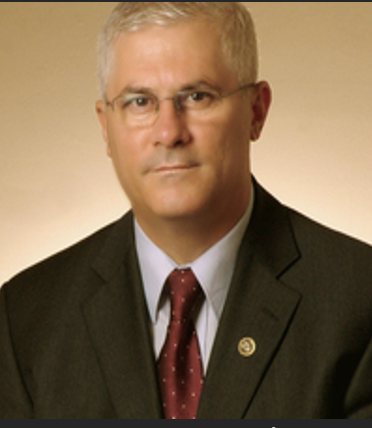
The Ankara Center for Crisis and Policy Studies (ANKASAM) has conducted an interview with Prof. Dr. Sait Yılmaz to evaluate the transformation in the global strategy of the United States, the diverging approaches between the Trump administration and the American ‘deep state’ structures, Europe’s security perception within the context of the Russia-Ukraine War, and the search for a new global order currently taking shape in the international system.
This interview addresses the United States’ policies toward NATO and Ukraine, the underlying reasons for Europe’s distant approach to peace, and the potential impacts of great power competition on both nation-states and the global security architecture.
1. How does the divergence between the Trump administration’s cost-and-trade-oriented foreign policy approach and the long-term global objectives of the institutional/deep structures in the U.S. affect the outlook on the Ukraine War and NATO? Could this situation lead to lasting consequences in terms of global power balances?
There is a room for maneuver. On the visible face of America, there is Trump’s state,the apparent state, the state as we know it; however, behind this lies a deep American state. Today, the Pentagon and the CIA emerge as the primary executors concerning global hegemony and the architects of the major projects being prepared for the East. Yet, there is an even deeper state behind them. This deeper state consists of actors who control American capital, predominantly Jewish-led, and are the actual actors seeking a confrontation with China.
From this perspective, Trump is attempting to implement his own statecraft in Ukraine within a system he presumptuously calls ‘strategic stability.’ What is this conception of the state? It is primarily about focusing on commercial relations and cutting costs. This is his outlook on both NATO and Ukraine. With an approach of ‘Why are we spending money here? This is the Europeans’ problem; let the Europeans pay,’ he is even prepared to completely shed the burden of the alliance.
For instance, he speaks of focusing on the Western Hemisphere. He paints a picture as if he intends to divide the world into three and leave the Western Hemisphere to America. However, what Trump understands by the ‘Western Hemisphere’ is merely curbing migration flows, seizing the resources of certain regions, and threatening countries worldwide through blackmail to usurp their mineral wealth. However, we also understand from the National Security Documents that these policies do not contain a very long-term projection. I do not believe Trump has even read these documents; rather, those around him have shaped a vision based on his previous views. In other words, this indicates that America’s future actions are not limited to Trump alone.
2. In Europe’s distant approach toward peace initiatives within the scope of the Russia-Ukraine War, while the security concerns of frontline states such as the Baltic countries and Poland remain decisive, could it be argued that a peace settlement under current conditions would pose risks of new conflicts and, therefore, the process is deemed premature?
Turning to Europe from here; Europe is not in favor of this peace agreement just to weather the Trump era. This is because they believe the time is not right for a peace deal with Russia. When, then, would such peace be established? Peace is made only when one side accepts defeat.” In other words, one side comes forward and says, ‘Yes, we are losing this war; let us make peace under favorable terms.’ Currently, such a situation does not exist. Neither Russia admits to being unsuccessful on the ground, nor does Ukraine. In such an environment, it is believed that any peace made would trigger a new war in the shortest possible time.
At this point, the primary actors standing behind Ukraine, namely the United Kingdom and other European countries, are aware that such a peace would soon give rise to new wars on their own fronts. The Baltic states and Poland, in particular, are the countries on the frontline in this sense. In other words, the West, or more accurately Europe, is currently occupied with an intensive rearmament process. For this reason, they are not inclined toward such peace and do not believe the time for peace has come. In fact, even if the possibility of peace were to emerge, a suitable environment for it does not exist from Europe’s perspective.
On the other hand, it is again America that is conducting the negotiations on behalf of Europe. However, this negotiation carried out by America bears an approach peculiar to the Trump administration. So much so that they seem ready to make a deal with Russia just to be able to use the Russians’ frozen assets in Europe for themselves. In other words, even in this negotiation conducted on behalf of Europe, Europe’s will remains in the background.
3. What kind of a future does Trump’s approach of temporarily balancing Russia to focus on China envision for nation-states and the European security architecture?
Regarding Ukraine, I believe that there is no leaning towards peace, especially with the support Europe provides to Zelensky, and that this process will not bring about peace. What Trump is currently trying to do is rather to focus on China and somehow neutralize Russia. However, we are aware that this is not part of the plans of the American deep state and the even larger state behind it. This situation is of a temporary nature; these policies will persist only as long as Trump is in power.
On the other hand, Europe is truly under threat. NATO is undergoing a period of staggering, particularly due to Trump’s approach. However, I view this period as a temporary one as well, and I do not believe there is any change in the grand plans.
This grand plan, on the other hand, is moving toward the disintegration and division of Russia. We are heading toward a new world order in the geography in question that will serve the global order, fragment nation-states, and lead to major fractures in Europe.