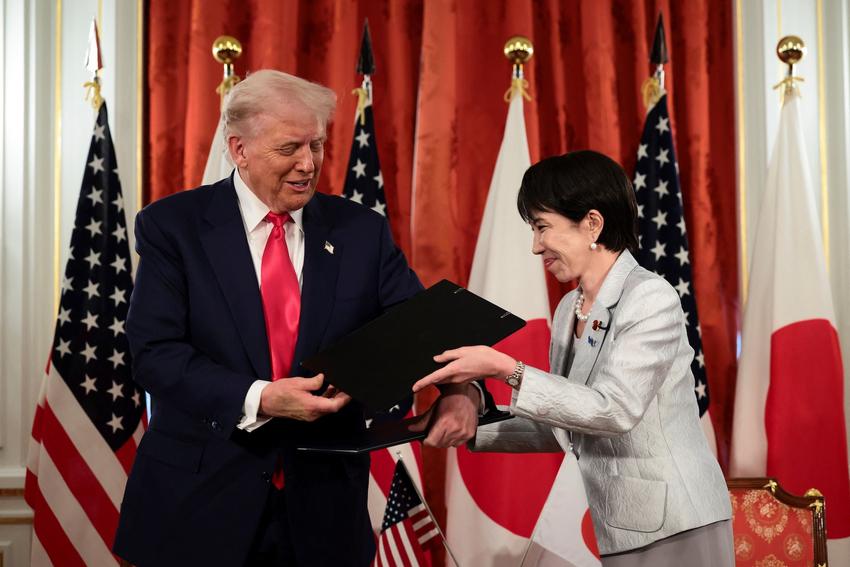

The U.S. Supreme Court’s decision rejecting President Donald Trump’s use of emergency powers to impose global tariffs is a major setback for his economic policy, but the legal defeat is likely to have a limited impact on his meeting with Japanese Prime Minister Sanae Takaichi next month.
The top court’s ruling on Friday came three days after Trump announced Japan’s first set of investment projects in the United States, worth about $36 billion, and asserted they would never have taken place without tariffs.
The projects, including building a massive natural gas facility to power artificial intelligence data centers, are part of a $550 billion package that Japan committed to in return for the Trump administration lowering tariffs on Japanese imports.
Given that the court ruled Trump’s invocation of the 1977 International Emergency Economic Powers Act to implement the sweeping tariffs without congressional approval was unconstitutional, Takaichi is expected to face pressure at home over the heavy investment of taxpayers’ money in the United States.
Japanese companies that have shown interest in taking part in such government-led initiatives could harbor second thoughts as well.