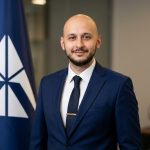


On 14 October 2026, Chinese Foreign Minister Wang Yi was received by Azerbaijani President Ilham Aliyev in Baku.[i] The following day, he attended the seventh summit of the Conference on Interaction and Confidence-Building Measures in Asia (CICA).[ii] At first glance, this programme might appear to consist merely of protocol engagements accompanying a multilateral summit. However, the substance of the meetings points to a different logic. Wang Yi’s engagements in Baku demonstrate that China is building its position along the Middle Corridor on political assurances rather than investment commitments and formal documents. The visit can therefore be read as a concrete example of the instruments through which corridor diplomacy is conducted.
The first component of this exchange of assurances is sovereignty. During his meeting with Aliyev, Wang Yi stated that China supports Azerbaijan’s independence, sovereignty and territorial integrity, and favours Azerbaijan assuming a greater role in CICA and other multilateral platforms. Aliyev, in turn, stated that his country firmly adheres to the One China principle and fully supports Xi Jinping’s global initiatives. Wang Yi also expressed his gratitude for Azerbaijan’s strong support on matters concerning China’s core interests. Beijing’s support for Azerbaijan’s sovereignty and territorial integrity is thus reciprocated by Baku’s support for the One China principle and China’s global initiatives. The two sides have consequently laid the groundwork for their relationship by providing mutual political assurances on issues of sensitivity to each other.[iii]
The asymmetry in the relationship, however, becomes apparent in economic matters. Aliyev called for expanded cooperation in energy and connectivity, increased investment by Chinese companies in Azerbaijan, and the full utilisation of mutual visa exemption arrangements. He also recalled that Azerbaijan was among the first countries to support the Belt and Road Initiative. The statement released by China’s Ministry of Foreign Affairs, however, contains no response from Wang Yi addressing investment, energy or the Belt and Road Initiative. Instead, Wang Yi stated that China was ready to develop cooperation on the corridor with Azerbaijan and other parties. This picture clearly shows that Baku is the party making concrete requests, while Beijing offers political support rather than specific commitments.[iv]
The meeting between the foreign ministers of the two countries reinforced the same pattern. Wang Yi stated that bilateral relations were experiencing the best period in their history and added that the two countries were ready to use the 35th anniversary of the establishment of diplomatic relations, which will fall next year, to advance their respective modernisation efforts. Azerbaijani Foreign Minister Jeyhun Bayramov, for his part, said that the two countries would expand cooperation under the Belt and Road Initiative, support the Middle Corridor, and seek to strengthen cooperation in transport, energy, climate change, artificial intelligence, and a wide range of humanitarian and cultural fields.[v]
The summit’s outcomes also indicate that the connectivity agenda is being driven by Caspian and Central Asian countries rather than by China. Member states adopted the Baku Declaration, which also addresses military-political, economic and environmental risks. Azerbaijan’s CICA chairmanship was extended for the 2026–2028 term, and Laos was admitted as a full member. Azerbaijan and Kazakhstan inaugurated the Trans-Caspian fibre-optic cable line, while Kazakhstan proposed a CICA Transport Connectivity Strategy. In light of these reported outcomes, Beijing’s role can be assessed as one of participating in agendas that align with its own corridor interests rather than primarily setting those agendas.
China’s real weight along the corridor, however, derives not from documents but from freight volumes. Rail freight transport between China and Azerbaijan increased by 47 per cent in 2024, reaching 612,000 tonnes. A memorandum of understanding signed between China Railway and Azerbaijan Railways in 2025 set a target of increasing traffic along the corridor to as many as ten block trains per day. The same memorandum specifically emphasised the need to expand capacity on the Baku–Tbilisi–Kars section, which extends the corridor from Baku through Tbilisi to Kars. Political assurances are therefore advancing alongside freight volumes and infrastructure development. The assurances given in Baku provide political insurance for the sustainability of these volumes.[vi]
This framework also presents opportunities for Türkiye. At the summit, Turkish Foreign Minister Hakan Fidan presented the Middle Corridor and the Development Road as strategic routes and advocated aligning the corridor with the Belt and Road Initiative. Wang Yi’s statement that China was ready to develop the corridor with Azerbaijan and other parties leaves Ankara considerable room for manoeuvre. However, Azerbaijan is the party to which Wang Yi explicitly extended political assurances in Baku. The Baku–Tbilisi–Kars line has been identified as a capacity bottleneck on the route into Türkiye. Ankara’s share of the potential gains will therefore depend on its efforts to address this capacity constraint.[vii]
In conclusion, Wang Yi’s engagements in Baku demonstrate that China’s strategy for the Middle Corridor rests not on investment commitments but on political assurances, including support for sovereignty and a greater role in multilateral platforms. The economic counterpart to this arrangement has yet to be formalised in a document. As the corridor’s freight volumes continue to grow, the absence of a corresponding formalisation of the political framework preserves flexibility in the relationship. For Türkiye, the central challenge is to convert its position at the corridor’s western gateway into bargaining power within Beijing’s Baku-centred architecture of political assurances.
Three scenarios stand out for the period ahead. First, the political assurances could be translated into a framework document covering investment, energy and transport on the occasion of the 35th anniversary of diplomatic relations in 2027. Baku’s requests for investment and China’s emphasis on the anniversary lend weight to this possibility. Second, the assurances could remain at the level of rhetoric without being translated into a formal document. In that case, the corridor’s growth would continue to depend on freight volumes and existing memoranda of understanding. Third, Beijing could extend similar political assurances to other countries along the corridor. Under this scenario, Türkiye’s bargaining power would depend on the extent to which it could expand capacity on the Baku–Tbilisi–Kars line. In all three scenarios, capacity will remain a decisive issue for Ankara.
[i] “阿塞拜疆总统阿利耶夫会见王毅”, Çin Halk Cumhuriyeti Dışişleri Bakanlığı, https://www.mfa.gov.cn/wjbzhd/202610/t20261014_12040376.shtml, (Date Accessed: 16.10.2026).
[ii] “Azerbaijan hosts rare summit of both converging and opposing Middle East and Asian leaders”, Euronews, https://www.euronews.com/2026/10/15/azerbaijan-hosts-rare-summit-of-both-converging-and-opposing-middle-east-and-asian-leaders, (Date Accessed: 16.10.2026).
[iii] “阿塞拜疆总统阿利耶夫会见王毅”, Çin Halk Cumhuriyeti Dışişleri Bakanlığı, https://www.mfa.gov.cn/wjbzhd/202610/t20261014_12040376.shtml, (Date Accessed: 16.10.2026).
[iv] Ibid.
[v] “Chinese FM holds talks with Azerbaijani counterpart”, Xinhua, https://english.news.cn/20261015/d9ad9fc5c10845fca9a7fe2c80671d83/c.html, (Date Accessed: 16.10.2026).
[vi] “China develops Trans-Caspian freight route”, International Railway Journal, https://www.railjournal.com/freight/china-develops-trans-caspian-freight-route/, (Date Accessed: 16.10.2026).
[vii] “Turkish FM heads to Baku for Asian security, trade talks, Gaza diplomacy”, Daily Sabah, https://www.dailysabah.com/politics/diplomacy/turkish-fm-heads-to-baku-for-asian-security-trade-talks-gaza-diplomacy, (Date Accessed: 16.10.2026).