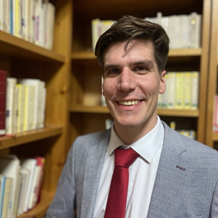
The Ankara Center for Crisis and Policy Studies (ANKASAM) presents its interview with Dr. Adrien Houguet, Visiting Professor at Webster University Tashkent and Research Fellow at the French Institute for Central Asian Studies (IFEAC), on the significance of the 2026 Shanghai Cooperation Organisation (SCO) Summit and the Sixth World Nomad Games held in Kyrgyzstan.
1. Kyrgyzstan hosted the opening of the Sixth World Nomad Games immediately alongside the 2026 SCO Summit in Bishkek. How do you assess the significance of hosting these two very different international events within the same period?
In an era of great-power competition, especially visible in Central Asia among Russia, China, the United States, the European Union and Türkiye and others, countries like Kyrgyzstan try to develop their own soft-power agency and advance their national interests. Kyrgyzstan’s election to the UN Security Council also fits this ambition: António Guterres said the country would be “in the center of global development and global efforts for peace.”
Hosting the SCO summit and the World Nomad Games together combines this international centrality with cultural distinctiveness. The underlying strategy is to present Kyrgyzstan as a platform for international dialogue, both political and cultural, and to use multilateral diplomacy as a resource for pursuing its own national interests. The summit brings political leaders around the table; the Games give Kyrgyzstan an opportunity to shape and share its own cultural narrative. Hosting also allows the country to shape the setting in which international actors meet.
We can observe a similar approach elsewhere in Central Asia, including in Uzbekistan, which hosted the Bukhara Biennial and UNESCO’s General Conference in Samarkand in 2025., These initiatives connect international engagement with the cultural identity of the host country.
However, this attempt to strengthen the country’s international position does not, by itself, prove that greater influence and strategic autonomy have already been achieved. We need more specific research to measurethese outcomes over time.
2. To what extent can cultural initiatives such as the World Nomad Games strengthen Kyrgyzstan’s international visibility and complement its engagement through multilateral platforms such as the SCO?
These events have multiple diplomatic dimensions, combining sports, cultural, tourism, science and technology diplomacy with more traditional multilateral engagement. They also reflect the national political agenda.
Around 3,000 athletes from more than 100 countries participated; organisers reported more than 200,000 visitors to the Kyrchyn cultural venue by 3 September., Unfortunately, I could not attend, but friends and colleagues described enjoying archery, traditional hunting disciplines, equestrian competitions, wrestling and traditional board games such as toguz korgool. There were even races to assemble and dismantle a yurt. The women’s Ak Möör team won the dismantling competition. The Games include both men’s and women’s categories, showing that, despite the masculine imagery around nomadic life, women play a central role in it as well. Kazakhstan was acknowledged as the overall medal leader, with 74 medals, including 32 gold, while Kyrgyzstan won both the kok-boru and kokpar finals. But beyond the medal table, the real victory is that these sporting practices remain alive.
The Games also have a broader ethnocultural dimension, involving living and shared traditions: music, instruments, clothing, food and crafts. Friends described tourists, athletes, local residents and people from nomadic and settled communities dancing and enjoying moments together. This is probably how Kyrgyzstan’s hospitality creates international attraction through shared experience and relationships that continue beyond the Games.
Scholarly exchanges add another dimension. During the Games, researchers gathered to discuss nomadic heritage. These exchanges raise questions of representation, inclusion and voice: who speaks for the nomadic world, and how do its communities present themselves internationally?
The opening ceremony also raises this question. With the growing use of AI technologies largely shaped by the great powers and their technology companies, whose images of nomadic life are being shown? An overreliance on AI-generated visuals risks marginalising these communities by reducing their ways of life to oversimplified images, even though these events are supposed to include them and make them visible internationally.
The environmental dimension has two sides. The Games convey a message of environmental awareness, including the relationship between nomadic ways of life and nature. Yet the environmental footprint of these events remains unclear.
Those dimensions coexist with political agendas. Domestically, with the presidential election due on 24 January 2027, we can view the Games and the SCO summit in a pre-election context: they offered Japarov an opportunity to associate his leadership with national pride and international recognition.
Internationally, the soft power dimension of the Games is obvious: holding the Games alongside the SCO summit allowed national leaders and their delegations to attend the opening ceremony on 31 August. The SCO’s membership comprises Russia, China, India, Pakistan, Iran, Belarus and four Central Asian states: Kyrgyzstan, Kazakhstan, Tajikistan and Uzbekistan. The wider SCO Plus meeting also included Mongolia as an observer, dialogue partners such as Türkiye, Egypt, Azerbaijan, Armenia and Laos, and invited countries including Vietnam and Togo.
The SCO’s twenty-fifth anniversary summit adopted 28 documents covering security, connectivity, economic cooperation, technology, the environment and cultural cooperation. For Kyrgyzstan, it was also an opportunity to promote specific national priorities: the China–Kyrgyzstan–Uzbekistan railway, investment through the Tamchy financial-investment territory, the proposed SCO Development Bank and fairer access to technology.
Hosting both events gave Kyrgyzstan an opportunity to connect its cultural visibility with its national priorities. The question is whether the show, together with the contacts and commitments made during the summit, will lead to investment, progress on the projects discussed and lasting international attention.
3. Could the combination of cultural diplomacy and active multilateral engagement become a more important component of Kyrgyzstan’s broader international positioning? What factors would determine its effectiveness?
I expect Kyrgyzstan to continue combining cultural diplomacy with multilateral engagement as part of its multivector approach, including through the Second Global Mountain Summit, “Bishkek+25,” scheduled for October 2027. This brings its national priorities on mountain regions and sustainable development to the international level. It also shows that Kyrgyzstan can take the initiative in setting the agenda on these issues and serve as an international platform for dialogue.
Kyrgyzstan initiated the World Nomad Games, hosting the first three editions in 2014, 2016 and 2018. They subsequently travelled to Türkiye in 2022 and Kazakhstan in 2024 before returning in 2026. Kazan will host in 2028, and we do not know when Kyrgyzstan will have another opportunity to host the Games.
Despite the importance of hospitality, repeated large-scale hosting is not a sufficient long-term strategy. Such events are expensive, so financial sustainability and lasting benefits matter. We cannot yet fully assess either.
There is also some ambiguity in the image Kyrgyzstan seeks to project. Japarov’s call for an SCO free from bloc thinking presents the country as a platform for international dialogue with all parties. At the same time, Freedom House’s 2026 assessment records a decline from 26 to 25 out of 100, alongside continuing restrictions on media and civil society. Moreover, many SCO member states are rated ‘Not Free’ by the same institution.
We therefore still need to assess whether Kyrgyzstan’s efforts to develop its soft-power agency through such events produce lasting influence and strengthen its international position.