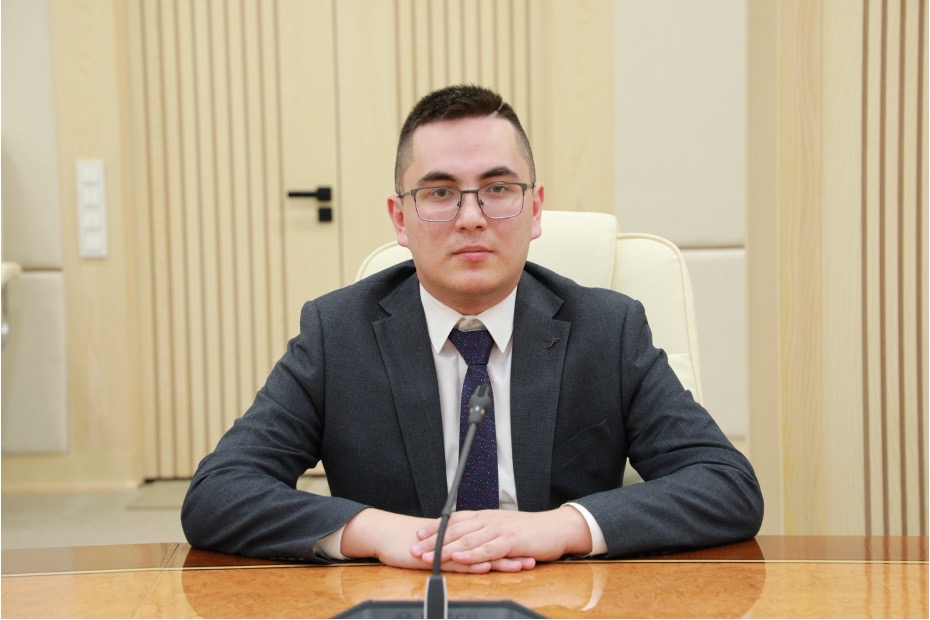

Umarbek Nuriddinov
Chief Research Fellow, Institute for Strategic and Regional Studies under the President of the Republic of Uzbekistan (ISRS)
Summit of the Heads of State of the Organization of Turkic States (OTS) will take place in Ankara on October on 29–30th, 2026, marking the fifth anniversary of its transformation into a fully-fledged international organization. This step broadened its agenda and strengthened the practical focus of cooperation in trade, economic development, transport, logistics and investment.
Since joining the organization, Uzbekistan has put forward more than 85 initiatives to advance practical cooperation. Tashkent’s active engagement is driven by its economic interests, the geographical links among member states and the full alignment of the OTS’s principles with Uzbekistan’s multi-vector foreign policy.
In this context, Uzbekistan views the OTS as an effective platform for diversifying its international economic ties, expanding access to export markets, developing an extensive network of transport corridors and advancing joint investment projects.
A key factor underpinning the organization’s relevance is its commitment to equality, non-interference in internal affairs, and mutual respect for sovereignty and territorial integrity. The OTS pursues a strictly pragmatic agenda and is not directed against third countries, providing a sound foundation for mutually beneficial partnerships.
The combined economic potential of its member states further enhances the organization’s importance. Together, they cover more than 4.25 million square kilometres and have a population of over 170 million. In 2025, their combined nominal GDP reached approximately US$2.3 trillion, while their total foreign trade exceeded US$1.2 trillion. These figures provide a basis for closer trade and economic cooperation, stronger production linkages and increased investment among member states.
Uzbekistan’s strategic approach consistently focuses on four principal areas of cooperation.
First, deepening economic cooperation. The main objective is to gradually establish a free trade area that facilitates the unrestricted movement of goods, capital and technology.
This is particularly important for Uzbekistan, which maintains close economic ties with the Turkic states. In 2025, Uzbekistan’s total trade with OTS members amounted to US$9.607 billion, accounting for approximately 12 per cent of the country’s foreign trade.
However, the economic benefits of integration within the OTS depend not only on the volume of trade among its members, but also on how closely their companies are integrated into one another’s production chains.
The complementary structures of their economies provide a favourable foundation for this process. Türkiye has a strong industrial base in machinery, automotive manufacturing, electrical equipment, textiles and chemicals. Kazakhstan and Azerbaijan combine substantial energy resources with significant metallurgical and petrochemical industries. Uzbekistan is rapidly developing its textile and garment industries, electrical equipment manufacturing, automotive industry, chemicals, food processing and non-ferrous metallurgy. Kyrgyzstan’s capabilities in light industry and agriculture complement this collective production capacity.
One notable example of joint industrial cooperation is the agreement between Uzbekistan and Azerbaijan to build an automotive plant in Hajigabul covering the full production cycle. The facility is scheduled to begin operations in mid-2027.
To expand such initiatives, Uzbekistan consistently advocates the removal of tariff and non-tariff barriers, the harmonization of technical regulations and the digitalization of customs procedures.
Tashkent reaffirmed this commitment at the Gabala Summit in autumn 2025, where Uzbekistan proposed establishing a Permanent Council of the Turkic States for Economic Partnership.
The initiative aims to localize production and develop flexible value chains. Effective mechanisms for economic cooperation are being deployed to translate these ambitious objectives into practice. These include the Digital Economy Partnership Agreement, which covers e-commerce, and the progressive simplification of customs procedures, both of which support the digital transformation of trade.
The successful launch of the Turkic Investment Fund, with authorized capital of US$500 million, has provided a financial foundation for joint investment projects, the modernization of production chains, and support for small and medium-sized enterprises, logistics infrastructure and innovation. Uzbekistan was one of the fund’s key founding members.
Overall, stronger economic, industrial and investment links among OTS members will help create competitive clusters that generate greater added value, reduce exposure to external economic shocks and build long-term resilience.
Second, expanding transport connectivity. This priority reflects Uzbekistan’s determination to overcome the constraints of its landlocked geography and use cooperation within the OTS to diversify its trade routes. Developing transport and logistics links is also essential to closer economic and industrial cooperation.
Particular attention is being paid to supporting the Middle Corridor, which crosses the Caspian Sea and passes through Azerbaijan, Georgia and Türkiye to reach European markets. Growing shipments of Uzbek cargo demonstrate the route’s increasing relevance. By 2025, the volume transported along this corridor had doubled over the preceding five years, indicating that it is becoming an established part of Uzbek companies’ logistics networks.
The construction of the China–Kyrgyzstan–Uzbekistan railway further increases the importance of this route for Uzbekistan. Connecting the railway to the trans-Caspian route could expand the country’s role in the East–West logistics network linking China, Central Asia, the Caucasus and Europe.
A modern transport corridor involves much more than roads and railways. Transit times and costs depend heavily on border procedures, permits, customs declarations, consignment notes and cargo tracking systems. Digitalization therefore has a distinct place in the OTS’s transport agenda.
Uzbekistan advocates the introduction of advanced tools, including electronic consignment notes (e-CMR) and electronic permits (E-Permit), to substantially reduce the administrative burden and time required for freight transport. A memorandum on the implementation of e-CMR electronic international road consignment notes was also signed at the ninth meeting of OTS transport ministers, held in Bishkek on 23 April 2026.
At the informal summit in Turkistan in May 2026, the President of Uzbekistan noted that the E-Permit system was fully operational between Uzbekistan and all OTS member states. He also proposed linking the Middle Corridor with the China–Kyrgyzstan–Uzbekistan railway, advancing the Simplified Customs Corridor, and digitalizing data exchange and cargo tracking.
Third, strengthening energy cooperation. Cooperation among OTS member states in the energy sector seeks both to diversify hydrocarbon transport routes and to support a large-scale joint transition towards an economy powered by renewable energy in response to global climate change.
Particular emphasis is placed on green energy, as joint efforts in this field create new opportunities to export clean energy to international markets.
Against this backdrop, at the Gabala Summit in 2025, President Shavkat Mirziyoyev advocated moving from a conventional energy dialogue towards a strategic partnership in green energy. He emphasized the importance of introducing the Turkic Green Corridors electronic system to further increase trade among member states and harmonize technical regulations, as well as establishing a Green Transformation Consortium to implement joint green energy projects.
In line with this approach, Tashkent has taken concrete steps. It supported the signing of an agreement with Kazakhstan and Azerbaijan to lay a submarine power cable across the Caspian Sea for the export of green electricity to Europe.
This forward-looking approach was also reflected in the Uzbek President’s earlier proposal, presented at the informal summit in Shusha in 2024, to establish a Turkic Ecological Council. The initiative seeks to address pressing water management challenges systematically, including those closely linked to hydropower development.
Cooperation with OTS member states in renewable energy is also expanding. Promising areas of collaboration with leading Turkish energy companies, including Çalık Holding, Aksa Enerji, GÜRİŞ and Cengiz Enerji, include the construction of solar and wind power plants, the deployment of energy storage systems and improvements in the efficiency of energy infrastructure.
Fourth, cultural and people-to-people cooperation. Uzbekistan sees the shared cultural heritage of OTS members as a living resource for advancing science, innovation and human capital, while laying lasting foundations for integration.
At the OTS Summit in Samarkand in 2022, President Shavkat Mirziyoyev stated: “We are rightly proud of our great shared ancestors, who made outstanding contributions to the ancient history of the Turkic world. Preserving their priceless legacy, studying it in depth and passing it on to future generations is a task of paramount importance for us all.”
This approach is put into practice through the work of specialized institutions, including TURKSOY, the Turkic Academy and the Turkic Culture and Heritage Foundation. Other notable initiatives include the annual designation of a Cultural Capital of the Turkic World, a title awarded to the ancient city of Khiva for 2020; the regular staging of the World Nomad Games; and the Modern Silk Road Joint Tour Project.
Uzbekistan has also given institutional expression to this approach through its initiative to establish the prestigious International Alisher Navoi Prize of the OTS, awarded “For Contribution to the Unity of the Turkic World.”
Overall, Uzbekistan regards the OTS as a means of expanding ties in trade, economic development, transport, logistics, energy, culture and people-to-people exchanges. Progress in these areas will help realize the organization’s full potential, strengthen regional connectivity and create further opportunities to advance Uzbekistan’s national interests. The OTS will therefore continue to play an important role in the country’s multi-vector foreign policy and in developing mutually beneficial cooperation with fellow member states.