

The second quarter of the twenty-first century is witnessing a period of “Tectonic Geopolitical Rupture,” in which the institutional, normative, and unipolar world order established after the Second World War is undergoing a definitive collapse. In this new conjuncture, where, in the words of Canadian Prime Minister Mark Carney, “the old world order is gone” and ruthless trade wars directly threaten sovereign rights, Ottawa is pursuing a proactive, radical, and multidimensional foreign policy to loosen its traditional dependence on Washington. The key factors driving Canada’s new strategic opening include the protectionist economic policies intensified by US tariffs and the need to escape the market constraints created by post-Brexit Britain and an increasingly inward-looking European Union (EU).
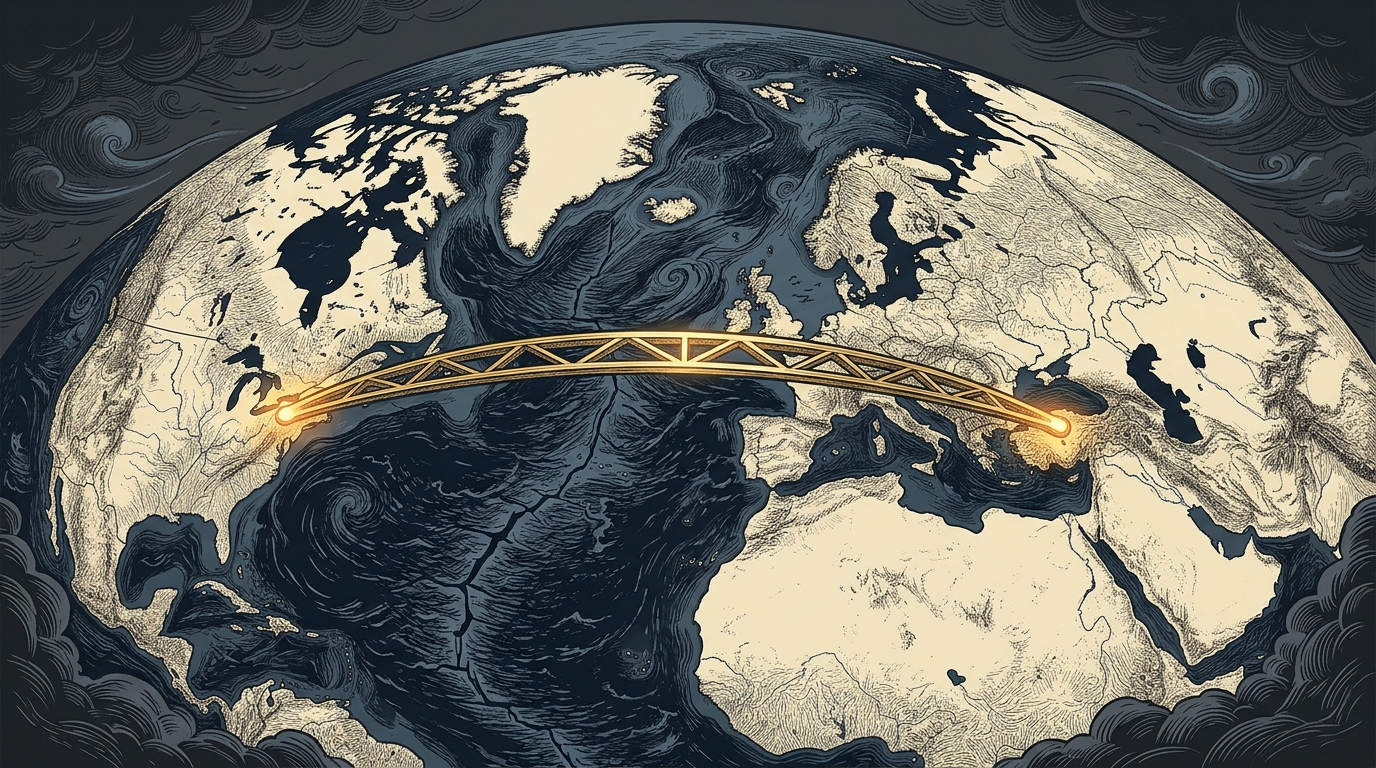
Amid this global upheaval, the doctrine of “Value-Based Realism,” introduced into the political lexicon by Carney, signals the end of an era of didactic foreign policy characterized by lecturing others from a distance. Ottawa now seeks to build networks of “Collective Resilience” and “Friend-Shoring” in its relations with allies to strengthen its economic and geopolitical security. Within this strategic framework, Eurasia, and Türkiye in particular, is emerging as one of the most critical fronts of “trusted partnership” chosen by Canada to safeguard its global supply chains and strategic sectors. In seeking to reduce the vulnerabilities created by unilateral dependencies, Ottawa is conceptualizing its ties with Ankara as a hybrid geopolitical bridge connecting the Atlantic and Eurasian spheres, as well as a multilateral asymmetric shield against the protectionist impositions of the global status quo and the “Multipolar Pressures” exerted by global actors.
Regional and Global Priorities: New Routes Beyond Britain and the EU
Regional priorities are being redefined as Canada seeks to connect its traditionally Atlantic-oriented markets to the Asia-Pacific and Middle Eastern corridors. In this context, Türkiye, with its potential in the defense industry, critical minerals, and nuclear energy, stands as a principal logistical, military, and industrial gateway to Eurasia. For Ottawa, which seeks to develop alternative supply chains to counter Russian and Chinese hegemony, Eurasia—particularly the Caucasus and Central Asia—is of vital importance in terms of energy diversification and sustainable mining. The imperative to reinforce the eastern frontier of Euro-Atlantic security has also placed the “Extended Black Sea” region, encompassing the Caspian Sea, high on the agenda of maritime security and regional stability.
In this process, Ottawa is implementing a strategy of “Geo-Economic Track Switching.” Britain’s inability to exert sufficient independent influence on the global stage after Brexit, coupled with the EU’s entrenched regulatory inertia, has pushed Canada away from its position as an “Atlantic Prisoner” and toward macro-regions that constitute the “Crossroads of Corridors.” On Ottawa’s new strategic map, Ankara is emerging not merely as a terminal point, but as a “Strategic Buffer Depot” that absorbs protectionist supply shocks and as a foundational cornerstone of the logistical backbone connecting the Mediterranean and Eurasia.
Why Is Eurasia a Strategic Necessity for Canada?
Britain’s struggle to find its direction in the aftermath of Brexit and the EU’s deep-seated structural crises have narrowed Canada’s room for maneuver in the global economy. In this context, Eurasia is not merely an enormous market; it is also a central hub for global energy supplies, liquefied natural gas (LNG) routes, and critical raw materials essential to sectors ranging from artificial intelligence to aviation. Canada must develop its relations with Eurasian countries because a unilateral wave of embargoes amid trade wars with the United States could paralyze Ottawa’s economy. The Turkic republics of Central Asia and the Caucasus are attractive destinations for Canada’s world-leading technological expertise in critical minerals and sustainable mining.
Accordingly, Canada seeks to establish an alternative “Trusted-Harbor Partnership” to counter the monopolization of the region by China’s Belt and Road Initiative. This imperative is directly linked to the paradigm of “Critical Raw Material Security.” In the face of China’s dominance over 70 percent of the global chip, semiconductor, and battery manufacturing market, Eurasia represents the last stronghold for alternative supply. Accounting for 60 percent of global GDP and 75 percent of the world’s population, this vast geography is not a luxury for Canada; rather, it represents a formula for survival through market diversification for a Canadian economy worth $1.8 trillion, caught between debt crises and American tariff barriers.
Türkiye as an Exceptional Partner: The End of a Prolonged Rupture and the Dawn of a New Era
Prime Minister Carney’s historic visit to Ankara has formally ended years of political and military estrangement between the two countries. Canada’s defense industry embargoes against Türkiye, previously justified by its operations in Syria and Karabakh, have given way to a level of “Strategic Partnership” dictated by realpolitik considerations. This renewed engagement goes beyond ordinary diplomatic normalization, bringing the two countries together around the concept of an “Asymmetric Protective Shield.”
The historical stagnation between Ankara and Ottawa has been broken by the collapse of the Western-centric illusion of “bloc loyalty.” The new era is turning the two countries into hybrid strategic levers capable of addressing each other’s geopolitical blind spots. Türkiye’s transcontinental operational depth provides an ideal foundation for Canada’s doctrine of “Multilayered Assurance,” developed to counter unilateral dependencies. This rapprochement could transform both countries into independent “Systemic Insurance Vaults” insulated from sanctions during global supply chain crises, while injecting a pragmatic form of “strategic autonomy” into the framework of alliance relations.
Ottawa’s Perspective on Ankara: Joint Projects and Financial Foundations
- A Symbiotic Relationship in the Defense Industry (MX-20D and KAAN Integration): L3Harris Wescam’s electro-optical reconnaissance and surveillance systems, including the MX-20D/MX-15D series, which were previously subject to Canadian export restrictions, are being made a permanent part of Türkiye’s unmanned platforms, such as the Bayraktar TB3, AKINCI unmanned combat aerial vehicle (UCAV), and ANKA-3, through joint qualification testing. More importantly, Canada’s aerospace giants, drawing on the collaborative infrastructure of Bombardier and CAE, are providing next-generation simulation and test engineering capabilities for the subsystem components and advanced composite airframe structures of Türkiye’s fifth-generation indigenous combat aircraft, KAAN. The Defense Security and Resilience Bank, established to finance this ecosystem, has initially assembled a funding pool of $1.5 billion.
- Energy and Nuclear Cooperation (CANDU Reactors): Canada’s proprietary CANDU (Canada Deuterium Uranium) heavy-water reactor technology has re-entered discussions concerning Türkiye’s planned second nuclear power plant in Sinop. Capable of operating on natural uranium, this technology offers strategic diversification that would prevent Türkiye from becoming dependent on a single supplier for its nuclear fuel.
- Joint Investments in Third Countries (Africa and Central Asia): A $500 million joint guarantee fund signed between Türk Eximbank and Export Development Canada (EDC) provides direct financing to Turkish-Canadian consortia undertaking infrastructure, transportation, and sustainable mining projects in Sub-Saharan Africa and Central Asia.
The Approaches of Global Actors: Lines of Reaction and Resistance
Canada’s autonomous initiatives are generating “Strategic Fracture Anxiety” among global centers of capital and power. The United States interprets Ottawa’s move as an “Escape from the Backyard” that challenges North American integration under the United States–Mexico–Canada Agreement (USMCA), as well as an attempt to bypass Washington’s sanctions monopoly. It is responding by intensifying tariff pressure to preserve allied dependence.
Russia views Canada’s attempt to move beyond its Arctic neighborhood and establish a “Transpolar Incursion” into Central Asia and the Black Sea—regions it considers its own backyard—through Türkiye as a geopolitical threat. Moscow is seeking to sabotage this emerging axis through its energy leverage.
The EU, constrained by its cumbersome institutional structure, is observing this dynamic partnership from the sidelines. At the same time, it regards the growing recognition of Türkiye’s strategic value with concern, interpreting it as a form of “Peripheral Autonomy” against the backdrop of its own enlargement crises.
Finally, Israel views Türkiye’s deep and asymmetric military-technological integration with a G7 power such as Canada within the Middle Eastern strategic equation as a “Geostrategic Lever” capable of shifting regional deterrence balances to its disadvantage, prompting heightened alert.
New Balances and Implications in the Regional and Global Equation
Canada’s strategic rapprochement with Türkiye and the elevation of their bilateral relations to a strategic partnership will have significant consequences for the global geopolitical architecture:
- A New Smart-Power Bloc Within NATO: In response to the United States’ exclusionary policies, two countries on NATO’s opposing flanks—Canada and Türkiye—are establishing an independent strategic line of resilience. It is highly plausible that Britain and the EU, or at least some EU member states, may join this alignment in the future.
- Multilateral Trade Against Protectionism: Through the Free Trade Agreement (FTA), negotiations for which are being accelerated between the two countries, the aim is to increase the existing bilateral trade volume of $3 billion to $10 billion over the medium term by dismantling tariff barriers.
- Complementary Roles in Crisis Management: In complex areas such as Ukraine, Gaza, and Black Sea security, Türkiye’s on-the-ground capacity for mediation could combine with Canada’s global financial and diplomatic standing to contribute to stability.
This alliance could usher in an era of “Polycentric Balancing Networks” within the global system. The Canada–Türkiye axis would serve as a multilateral “Force-Multiplier Bridge,” preventing a rigid separation between the Global South and the Global North. The steps taken by the two countries have demonstrated that the financial power of the G7 can be combined with regional military autonomy. By breaking the obligation of “Blind Loyalty” imposed by Washington and other global power centers, the partnership offers medium-sized states a new sphere of “Autonomous Leverage.”
Future Outlook and Strategic Horizons
Over the coming decade, Canada–Türkiye relations are poised to move beyond a purely bilateral trade partnership and become one of the principal pillars ensuring supply chain stability across Eurasia. Several major geopolitical and economic transformations could emerge along this axis:
- Breaking Global Monopolies in Aviation and Unmanned Systems: The complete removal of restrictions on the defense industry could enable the full integration of Canada’s advanced optical and sensor technologies with Türkiye’s globally recognized unmanned aerial vehicles (UAVs) and armed unmanned aerial vehicles (UCAVs). This partnership could elevate both countries to the position of joint manufacturers capable of challenging the dominance of traditional giants in the global aerospace market.
- Securing Critical Minerals and Energy Corridors: Canada’s technological superiority in mining could be combined with Türkiye’s extensive diplomatic influence in Central Asia and Africa. This convergence could trigger the emergence of an alternative “Green Corridor” logistics route capable of breaking existing monopolies over rare earth elements and critical minerals.
- Financial and Digital Integration: A process beginning with trade councils could, over the longer term, connect the cybersecurity and artificial intelligence infrastructures of the two countries. This new digital bridge between Atlantic and Eurasian financial markets could turn both countries into more resilient safe havens against potential global financial shocks.
Conclusion
The new strategic synchronization established along the Ankara–Ottawa axis represents the first concrete prototype of a “Multidimensional Balancing” architecture in international relations, despite the resistance strategies of superpowers and regional actors. Under Carney’s leadership, Canada has reinterpreted Mustafa Kemal Atatürk’s vision of “Peace at Home, Peace in the World” as a modern instrument of realpolitik and has recognized Türkiye as an “Indispensable Exceptional Partner” in confronting global crises and the multiple pressure fronts imposed by global actors.
This alliance strikingly demonstrates that two middle powers can strengthen their spheres of strategic autonomy without submitting to superpower blocs, overcoming US protectionist embargoes, Russian spheres of influence, and other actors’ supply monopolies.
The model of deep integration between the two countries—extending from defense architecture and critical commodity chains to civilian nuclear energy and digital financial infrastructure—could play a decisive role in the emerging polycentric global hierarchy. These “Flexible Alliance Networks,” replacing demands for blind loyalty within blocs, could serve as a “Systemic Shock Absorber,” dampening the waves generated by protectionism and reactions from global power centers in a new world emerging from the ashes of unipolarity.
Ultimately, it can be argued that the Canada–Türkiye axis has made a lasting mark on the literature by moving well beyond the pragmatic gains available to two capitals and laying the groundwork for a resilient, predictable, and peaceful new island of global stability at the intersection of Eurasia and the Atlantic.