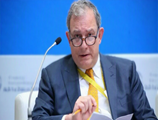
The Ankara Center for Crisis and Policy Studies (ANKASAM) presents the views of Javier M. Piedra, Senior Correspondent for “The Times of Central Asia”, on Central Asia’s growing strategic importance in critical minerals, the region’s investment potential, the impact of the C5+1 Critical Minerals Dialogue, and Kazakhstan’s leading position in the vanadium sector.
1. To what extent is Central Asia emerging as a critical-minerals powerhouse, and what factors will determine whether the region can realize its full potential?
Central Asia’s strategic importance in critical minerals is rising, but it hasn’t yet become a true powerhouse. The geology is solid, the five countries are politically aligned, and global demand is climbing—yet most still export raw ore instead of refined materials. The real competition now is over processing, logistics, and financing, not mineral ownership. Until that shift, the region stays promising rather than transformative.
Barring a severe global economic crisis, major geopolitical instability, or external interference, I still expect investment to keep flowing in. To become a powerhouse it will require additional time.
2. To what extent did the C5+1 Critical Minerals Dialogue in Astana represent a turning point for investment and regional value chains?
It was much more than a photo-op but calling it a breakthrough is premature. The history of mining is significant in Central Asia – you can be sure of that. The meeting in Astana raised further Central Asia’s strategic profile globally, yet investors still price projects on sovereign risk, infrastructure, legal certainty, and commercial returns—not presentations and communiqués.
As business fundamentals improve, and the C5+1 Critical Minerals Dialogue helped, expect an even more robust investment pipeline, as long as the geopolitical upheavals in its neighborhood do not spill over into Central Asia. Hopefully we won’t see another round of attacks—in the Black Sea, for example, or elsewhere — on infrastructure and other assets. Such negative events directly affect capital flows and development initiatives.
I would direct you to one of my recent articles which may give you additional insights into investor interests in Central Asia: “Washington and Tashkent Deepen Economic Ties at Tashkent International Investment Forum”.
3. What more should Central Asian governments do to convert strong investor interest in critical minerals into sustainable, long-term capital?
Progress varies by country, but the region as a whole has improved its investment climate—more competitive fiscal terms, better macro management, manageable debt, and far greater openness to foreign investors than five years ago. Kazakhstan, Uzbekistan, and increasingly Kyrgyzstan have gone beyond touting mineral potential to build actual ecosystems around logistics, industrial zones, and downstream processing, with the OECD noting stronger efforts on responsible mining and environmental governance.
The gap now is execution: slow mine approvals (but that is typical around the world), incomplete geological data, weak infrastructure near deposits, and thin local support systems. Knowing that, governments should continue to prioritize bankable projects—reliable power, transport, transparent regulation — over more planning and policy. Capital will flow where risk is manageable and trusted local partners are on board; absent that, a go-it-alone approach isn’t advisable.
4. Why has Kazakhstan emerged as the regional leader in vanadium development, and what factors have contributed to this position?
Kazakhstan was quick to see vanadium’s emerging status as both an industrial input and a strategic asset — the origins of the deposits date to the Soviet period. Beyond simply sitting on reserves, Astana has combined welcoming investment policy with hands-on operating experience and advancing projects such as Ferro-Alloy Resources Balasausqandiq deposit — positioning itself as a rare credible alternative to the China-Russia dominated vanadium market.
For further insight into vanadium, I would recommend reading my recent article “Is vanadium the future of critical minerals? Kazakhstan hopes so.”
Central Asia holds vast, underexplored mineral wealth and increasingly favorable investment conditions are one reason it deserves a closer look.