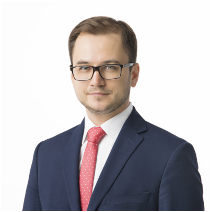


The Ankara Center for Crisis and Policy Studies (ANKASAM) presents its interview with Przemyslaw Ozierski, Senior Researcher at the Central Asia Strategic Center for Analysis, Dialogue and Development (CASCADD), on the significance of the Second Fergana Peace Forum and its potential contribution to cross-border economic cooperation.
1. The Second Fergana Peace Forum, held on September 28–29, focused on strengthening cooperation among Kyrgyzstan, Tajikistan and Uzbekistan following the Khujand Declaration on Eternal Friendship. What significance does the Forum have for the further development of regional cooperation in the Fergana Valley?
Having participated in and engaged with the discussions at the Second Fergana Peace Forum, I can confidently state that it represents a critical paradigm shift. For decades, the Fergana Valley was predominantly viewed through the lens of its complexities: border disputes, high population density, resource competition, and historical tensions. The Khujand Declaration provided the essential top-down political will to resolve these issues. The true significance of this Forum, however, is the clear demonstration that the region is shifting from a logic of conflict management to a logic of shared development and connectivity.
I must commend this year’s organizers, particularly the Center for Strategic Research under the President of Tajikistan, for their exceptional stewardship of this process. They effectively took the baton from Uzbekistan, which hosted last year, and are now seamlessly preparing to hand it over to Kyrgyzstan for the next iteration. This rotational model is vital: it closes the circle of trilateral ownership, ensuring that the Fergana Peace Process is not perceived as a project of a single state, but as a genuinely shared regional asset.
Furthermore, the Forum brilliantly balanced high-level strategic dialogues with grassroots initiatives like #Yntymak Week. Spearheaded by the Peacebuilding Hub and an informal collective of civil society organizations, Yntymak Week was not merely an add-on; it was the heartbeat of the second day. It placed civil society, youth, women, and local communities at the very center of the conversation, acknowledging that while political agreements create the framework, sustainable peace is ultimately built by the people.
2. The Forum placed particular emphasis on translating political trust into practical cooperation. Which areas of cross-border economic cooperation offer the greatest potential for strengthening connectivity and shared development in the Fergana Valley?
Translating political trust into practical cooperation requires focusing on areas where interdependence yields mutual, tangible benefits. Based on the forum’s discussions and my own engagements on the ground, three areas offer the greatest potential:
First, harmonized logistics and local cross-border mobility. The delimitation of borders has created new physical realities. For instance, a local taxi driver pointed out to me how new border rules have fundamentally reshaped the local micro-economy, turning what was once a simple, short walk to a neighboring village into a lengthy, costly detour. This issue cannot wait, as the memory of natural daily-life interactions across these borders is fading with each passing generation. Addressing it requires streamlining local transit procedures and developing joint customs protocols. Making the “cost of cooperation” lower than the “cost of isolation” is the foundational step for all other economic integration. Beyond immediate local logistics, the construction of the China-Kyrgyzstan-Uzbekistan Railway represents a potential game-changer for the valley’s connectivity, with significant logistical spillover effects. However, this presents both an opportunity and a challenge: ensuring that the valley becomes an integrated, cohesive economic space rather than merely a transit corridor bypassed by global trade flows.
Second, joint industrial and agricultural value chains. Rather than competing in identical markets, the three regions possess complementary comparative advantages. The Forum highlighted the potential for creating joint production facilities and special economic zones near border areas. By pooling resources, expertise, and labor, local businesses can create cross-border supply chains that boost employment and make the regional economy more resilient to external shocks. Beyond the forum’s discussions, one additional mechanism I would propose is a trilateral framework for geographical indications and origin-based product protection, drawing on the European Union’s experience and building on existing national initiatives in the valley. This could support cooperation on the protection and promotion of distinctive local products—from Margilan textiles and traditional crafts to agricultural products such as melons and dried fruits—while exploring shared cross-border designations where appropriate. Such cooperation could help safeguard regional heritage, strengthen market recognition and create shared economic incentives across borders.
Third, the green economy and environmental security. Issues like water management, climate adaptation, and the preservation of shared ecosystems respect no national borders. Framing environmental protection not as a zero-sum resource competition, but as a shared economic opportunity (e.g., joint eco-tourism, sustainable agriculture), offers a highly effective entry point for deeper integration. When neighbors cooperate to protect their common environment, they build habits of trust that naturally spill over into other economic sectors.
3. Looking ahead, how can initiatives involving regional authorities, expert communities and local communities help sustain the current momentum and support long-term cooperation across the Fergana Valley?
Sustaining this momentum requires moving from episodic dialogue to institutionalized, everyday cooperation. The human element is paramount here. For example, during a sightseeing visit to the historic Khujand fortress, I spoke with a local master craftsman who shared a deeply personal hope: that these new frameworks of cooperation would finally allow him to safely and easily visit his extended family in Osh. Initiatives must be designed to fulfill these very real, human aspirations.
To achieve this, we must act on three interconnected levels. At the level of regional authorities, the focus must be on creating “enabling environments” by establishing permanent, trilateral working groups at the provincial level. These groups can rapidly address emerging local issues before they escalate, ensuring that border management facilitates, rather than hinders, natural human and economic ties. For expert communities, the priority is to build a shared, regional knowledge base. Moving toward joint research initiatives and trilateral academic programs is essential to provide evidence-based policy recommendations that help governments anticipate challenges proactively, rather than reacting to crises.
Finally, local communities must be treated as co-architects of peace. We are already putting this into practice: immediately following the Forum, on September 30, 2026, Dr. Leanne Kelly of Deakin University, in collaboration with CASCADD, organized a roundtable in Khujand titled “Community Resilience to Compounding Crises.” This session brought together civil society representatives and local stakeholders to discuss how communities experience, respond to, and adapt to multiple interconnected challenges, laying the groundwork for future research on measuring change in the Fergana Valley. Empowering these grassroots networks ensures that the peace built in conference halls is sustained in the daily realities of the valley.