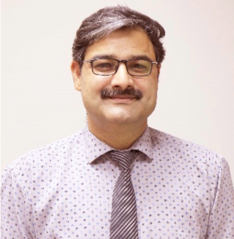


The Ankara Center for Crisis and Policy Studies (ANKASAM) presents its interview with Professor Adam Saud, Director of the School of Humanities and Social Sciences at Bahria University, on Pakistan’s economic connectivity with Central Asia, trade and investment opportunities, and the prospects for future economic cooperation in the context of the Uzbekistan-Afghanistan-Pakistan railway project and broader efforts to strengthen regional connectivity.
1. Amid renewed efforts in 2026 to advance the Uzbekistan-Afghanistan-Pakistan railway, how could the project contribute to strengthening Pakistan’s economic connectivity with Central Asia?
I think the proposed Trans-Afghan Railway Corridor will be a game changer, once completed. This will be the first ever direct overland rail link between Pakistan and the Central Asian states. This corridor will cover around 650 KMs across Afghanistan. Starting from Mizar-i-Shareef and ending in Kharlachi in Kurram district of Pakistan, the corridor will also connect several regions of Afghanistan with Central and South Asian markets.
Russia and Kazakhstan along with Turkmenistan have also proposed a western corridor of Trans-Afghan Railway which will connect Chamman border of Pakistan with the western city of Herat in Afghanistan. For me both are equally important. However, the idea to construct the UAP was given by Uzbek president Shavkat Mirziyoyev in 2021.
It will not only reduce the transit time between Pakistan and Central Asia from 30-35 days to only 3-5 days, but will also complement the under-construction Kashgar-Osh-Andijon railway corridor. Through this railway connectivity, Pakistan can even reach the Chinese markets. Once completed, it is expected to ship 15-20 million tons of cargo annually that is expected to increase with the passing years.
This route will provide an alternative and efficient gateway to Central Asian states while bypassing the northern Russian, and “turbulent” Iranian ports. This will also compliment the Pakistan’s Vision Central Asia.
2. In light of these recent connectivity efforts, what opportunities could closer transport links with Central Asia create for Pakistan in terms of trade, investment and access to regional markets?
Pakistan is passing through a fragile economic situation, and it wants to explore new markets to increase its exports. Central Asia and beyond provide Islamabad one of the most suitable options in this regard. Operationalization of UAP railway lines will not only increase the bilateral trade between Pakistan and Central Asia on one hand and Pakistan and Russia and Caucasus on the other hand, but will also provide an easy and affordable access to these states to international markets through Gwadar, Karachi, and Bin Qasim Ports. It will also provide a safe and secure transit route through Afghanistan.
Moreover, every tonne of Central Asian or Russian cargo moving to global markets through Pakistani ports generates transit revenue, port throughput, and logistics-sector employment (warehousing, customs services, freight forwarding, trucking to the rail-heads).
UAP may help Pakistan to become a credible corridor for which, Pakistan needs to establish special economic zones near to ports and major entry points. Furthermore, success of UAP may also help completion of the long awaited TAPI and CASA-1000 projects as well.
3. Looking ahead, how do you assess the prospects for deeper economic cooperation between Pakistan and the Central Asian states as these connectivity initiatives move forward? Are there any logistical, financial or institutional considerations that could influence this process?
As already explained, this project may connect Central Asia and Russia not only with Pakistan but broader South Asia, South East Asia, and other international markets. It will be a win-win situation for all including Afghanistan. UAP will help transformation of Preferential Trade Agreements between Pakistan and Uzbekistan, and Pakistan and Kazakhstan to the Free Trade Agreements.
However, there are a few genuine challenges to this project. First and foremost is the financing of the project. The Asian development Bank has backed off to finance the project after Taliban took over Kabul in August 2021. The cost estimates have already risen from $5 billion to around $7 billion. Furthermore, instability in Afghanistan and terrorists’ attacks in Pakistan from Afghan soil have deteriorated the relations between both the neighbors. TTP’s sanctuaries in Afghanistan and current support to BLA terrorists from Afghan soil has further intensified the relations between Kabul and Islamabad. Pakistan has clearly told Taliban regime in Afghanistan that it will not sit quietly against the terrorist activities emanating from Afghan soil. Taliban regime has turned down all requests from Pakistan to expel TTP’s terrorists from Afghan soil. Frequent suspension of border crossings between the two countries is a major challenge to South-Central Asia connectivity.
Another challenge is the direct financial transactions. There is no direct financial transaction channel between Pakistan and Central Asia and Russia. This limits the private sector’s participation even if the UAP is operationalized.
Since the project involves three countries, strong coordination at each level of hierarchy is needed. Customs harmonization, transit-fee agreements, and single-window border procedures are unglamorous but decisive; a rail line without streamlined customs just moves the current trucking bottleneck to a different chokepoint.
CASA-1000 started in 2014 is still incomplete. The only section remaining to be completed is in Afghanistan. Although, the work has resumed in Afghan section, yet the pace is extremely slow. It is expected that this project will be completed by end 2027. CASA-1000 is a test case for the Trans-Afghan Railway project as well. Any project successfully completed and operationalized between South and Central Asia, will be the beginning of long-term deep connectivity between the two regions.
In order to operationalize the project smoothly, offshore banking arrangements have been set up in Abu Dhabi so that project funds and power-purchase payments stay outside Taliban government oversight — this is the exact kind of financial-institutional workaround the railway project will likely need too, given the same non-recognition problem. Keeping in view the CASA-1000 completion trajectory, UAP’s completion seems impossible in near future. It may be completed by the end of 2031 if ‘actual’ work starts by end 2026.
The Trans-Afghan railway corridor can be a game changer not only in the connectivity between Pakistan and Central Asia but the greater Eurasian region. Amid Russia-Ukraine and Strait of Hormuz conflicts, transit trade through Pakistan seems a great opportunity for Central Asia and Russia. It will also open up new opportunities for Pakistan in trade, investment, and market accessibility. Yet financing gaps, Afghan instability, security tensions, absence of banking channels, and weak customs coordination remain major constraints. Success hinges on CASA-1000’s progress; realistically, full UAP operationalization appears unlikely before 2031.