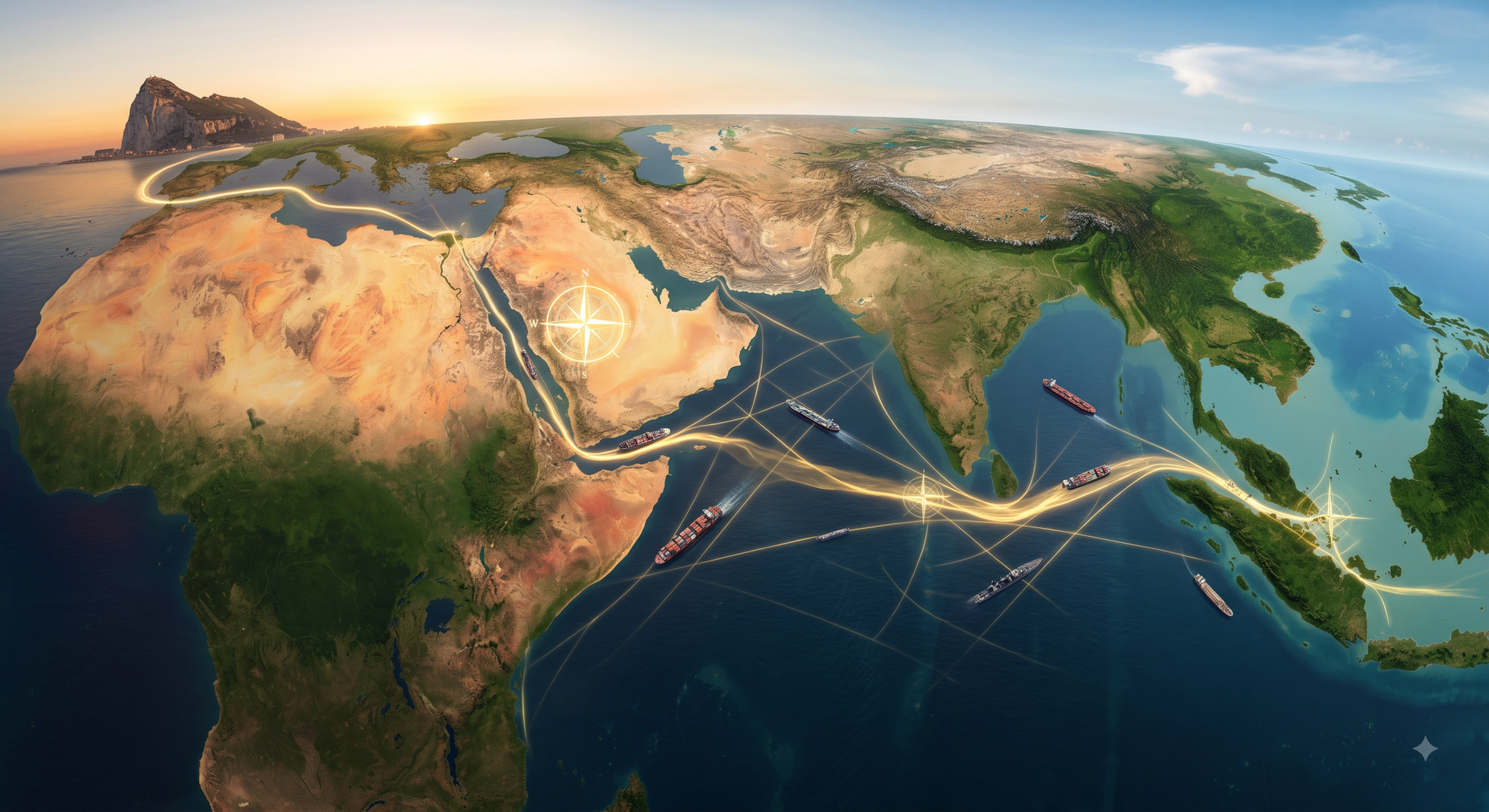


In today’s geopolitical climate, in which the international system is evolving toward a polycentric, fluid, and fragmented structure, the transatlantic security umbrella is experiencing a profound “crisis of confidence.” The Mecca Joint Defense Treaty (Mecca Pact) signed between Türkiye, Saudi Arabia, and Pakistan has emerged upon the broad legitimacy and operational foundation provided by a 14-country maritime security alliance, including Türkiye and Pakistan, established in July 2026 in response to the Houthi blockade in the Red Sea, at a time when the transatlantic alliance is weakening. As I noted in my analysis entitled “The Return of the Geopolitics of Islam: A New Regional Security Architecture in the Middle East and the Mecca Pact,” this “Multinational Maritime Defense Alliance,” established under the leadership of Saudi Arabia with the participation of 14 countries, has created a geographical perimeter of legitimacy.
As a result of “Power Distribution and Synergistic Differentiation,” a regional power that has proven its military credentials (Türkiye), a financial giant (Saudi Arabia), and a nuclear power (Pakistan) have emerged from this broad pool as a distinctive core alliance. What fundamentally distinguishes this pact from superficial partnerships is that an automatically functioning collective deterrence mechanism modeled on Article 5 of NATO constitutes the very essence of the pact. This robust deterrence commitment is the existential rationale for the pact. The pact is based not only on strong military cooperation, but also on substantial cooperation in the economic, commercial, political, and technological spheres. Fully aware of the structural challenges they face, these actors have, rather than confronting the risk of total loss, acted upon a clear common will underpinned by a shared local/regional strategic mind, whose formation dates back to much earlier years, thereby constructing a new global center of power that seeks to ensure harmony among geography, politics, strategy, and instruments.
The reactions of global powers to the Mecca Pact are taking shape in accordance with the Pact’s capacity to exert influence over the “Expanded Indian Ocean Geopolitics” stretching from Gibraltar to Malacca, and it is worth emphasizing in this context that any military move aimed at testing the Pact could produce devastating consequences for the actors concerned, tantamount to “playing Russian roulette.”
Collective Security Guarantees Along the Red Sea Routes
In this context, for example, the Article 5-based deterrence of the “Mecca Pact” could, in the event of an asymmetric or state-based threat emerging along critical transit routes such as the Bab el-Mandeb Strait and the Gulf of Aden, cease to be an abstract claim and evolve into tangible military-economic protection. The Pact’s operational logic in this region is based on the mission of providing substantial relief at both the regional and global levels by preventing disruptions to the global financial system and supply chains.
In the event of a crisis along the Bab el-Mandeb and Red Sea corridor, the Pact’s “Politics-Strategy-Instruments” harmony and determination will most likely be activated as follows: Türkiye, through aerial intelligence, unmanned systems, and electronic warfare capabilities, will neutralize the threat environment, while Pakistan will physically open secure corridors through the conventional strike power of its naval forces. Saudi Arabia, meanwhile, will seek to ensure the full logistical and financial sustainability of the operation, together with its basing capabilities. With other regional countries on the periphery of the aforementioned maritime security alliance providing port access and airspace facilities for the operation, the grounds for unwarranted intervention by global powers in the region will be eliminated. In this way, the Pact will make its greatest contribution to the stability of the international system by resolving, through local capabilities, bottlenecks capable of paralyzing the global economy.
In this process and its aftermath, the positions of regional and global actors will undoubtedly also be largely decisive. In this context, when we assess the factors shaping the perspectives of leading actors and their global threat perceptions, the following picture emerges:
- The United States and the Western Bloc: Washington is cautiously and silently observing its allies’ efforts to build military autonomy independent of its oversight. This commitment by Türkiye, a NATO member, and Saudi Arabia, a critical Gulf partner, signifies the localization of the Western-oriented security monopoly. Directly targeting this mechanism, which operates along the lines of Article 5, or testing the Pact’s members militarily/economically carries the risk of severing all logistical links of the transatlantic system across the Middle East and South Asia.
- China and Russia: Beijing and Moscow view favorably the balancing of the United States’ unilateral intervention capacity through this Pact. The stability provided by the Pact serves as a safety valve for China’s Belt and Road Initiative and the security of maritime transportation routes. This security belt, extending from the Eastern Mediterranean to Malacca, deprives global powers of the means to destabilize the region.
- India and Core Deterrence: New Delhi is deeply concerned by the inclusion of its longstanding rival Pakistan in the military equation. However, it would be a strategic mistake to characterize Pakistan’s nuclear capability and the possibility of its use solely as a deterrent directed against India. By virtue of Article 5 of the Pact, this nuclear capability has been transformed into an extended strategic deterrence umbrella covering the entire geography of the alliance, including the Eastern Mediterranean and the Gulf.
Geopolitical Routes, Supply Chains, and the Reality of a “Collective Position”
By its very nature, the Mecca Pact makes it inevitable for its member states to act in full concert with regard to strategic resources, geopolitical routes, and supply chains. This cooperation-based alignment undoubtedly also alters the character of unilateral economic corridor projects imposed on the region by external powers.
With regard to projects such as IMEC (India-Middle East-Europe Economic Corridor), the members of the “Mecca Pact” will first and foremost adopt a common and collective position in line with their own interests. The region’s transportation and logistics map is no longer being shaped by projects conceived externally and imposed from outside, but by the priorities of local strategic thinking. In the current conjuncture, in which integrated and autonomous mega-projects that interconnect the region from within are once again emerging prominently—including the Development Road Corridor, linking the Persian Gulf through Iraq to Türkiye and onward to Europe; the modern integration of the historic Hejaz Railway project; the Middle Corridor ecosystem via the Caspian Sea; and the Gulf-Red Sea Railway Networks—if an IMEC project is to continue to exist, it will do so only in accordance with the conditions set by the “Mecca Pact” and the new imperatives of realpolitik.
The new logistics axis resulting from the integration of these projects will provide secure land-based alternatives to vulnerable maritime routes, thereby generating substantial reductions in global maritime transport insurance costs. The military-strategic protective shield of the “Mecca Pact” in the context of corridor/supply-chain security will secure these routes by localizing asymmetric threats along them and protect supply chains from global coercion.
Energy-transfer security along the interconnected corridors is reinforced by the Pact’s joint early-warning networks, satellite integration, and cross-border autonomous security protocols; pipelines and critical terminals are continuously protected against the risk of asymmetric sabotage under the joint military-technological shield of the three countries. The Pact positions control over logistics routes not as an instrument of coercion, but as an architecture of collective guarantees ensuring the continuity of global trade.
Counter-Coalitions and the Strategic Response of a Common Will
On the other hand, although the “geopolitical wave” generated by the “Mecca Pact” has triggered efforts to establish a “counter-pact” among India, Israel, and Greece, these efforts are bound to remain ineffective against the comprehensive wall erected by the Pact. In addition to the Pact’s unique geopolitical-strategic position, its military, economic, commercial, and diplomatic strength clearly narrows the room for maneuver of the counter-alignments being sought. Furthermore, counter-actors are incapable of producing a logistical alternative capable of overcoming the collective control exercised by the Pact’s members over strategic resources (energy, minerals, and technology corridors). Moreover, once the links in the chain stretching from Gibraltar to Malacca are interlocked, asymmetric interventions from outside or attempts to turn Pact members against one another will be repelled through the collective diplomatic and economic blockade imposed by the member states. Over time, this point will become increasingly evident.
In this regard, the global stability belt and expanded regional architecture constructed by the “Mecca Pact” provide a strategic response through a local will that takes into account the harmony of politics, strategy, and instruments. Ensuring common energy and supply-chain security, and realizing the synergy of the Development Road, the Hejaz route, and the Middle Corridor, are building a comprehensive geopolitical wall that will render the asymmetric moves generated by counter-coalitions entirely ineffective.
Integration into the Global Financial System and the Division of Roles
The “Mecca Pact” does not seek to dismantle or target the existing international financial system. On the contrary, the Pact is a concrete outcome of the efforts of the countries of the region to secure a more just, equitable, and stronger position within the existing global economic system.
Accordingly, among the Pact’s member states, both current and prospective, a clear division of roles and complementary relations have become inevitable. In this context:
- Türkiye: With its defense industry ecosystem, technological infrastructure, experience in military doctrine, and industrial production capacity, it serves as the Pact’s “technology and production” locomotive. It is the gateway through which the Development Road and Middle Corridor open toward Europe.
- Saudi Arabia: With its weight in global energy markets, petrodollar liquidity, and extensive financial capacity, it constitutes the Pact’s “economic and investment” backbone. It is the principal financier of the Hejaz and Gulf railway networks.
- Pakistan: With its human resources, conventional military depth, and nuclear deterrence capability, it serves as the Pact’s “strategic security” shield. Through the China-Pakistan Economic Corridor (CPEC), it provides an alternative ocean gateway to Malacca.
This division of roles enables the Pact to evolve into a rational economic bloc capable of self-financing in the face of financial shocks, resisting external debt coercion, and securing its rightful share in existing global markets through collective bargaining power. Therefore, the Pact is poised, in the period ahead, to emerge as a rising center of attraction and to fill the power vacuum in the region.
Interest in the Pact and the Dynamics of New Membership
The comprehensive protection and economic complementarities provided by the 14-country maritime security alliance established in July 2026 in response to the Houthi blockade in the Red Sea, which includes Türkiye and Pakistan, continue to sustain the interest of other countries on the periphery of the alliance in its core structure. The Pact’s membership and cooperation structure operates not so much through an institutional hierarchy as through a dynamic three-tiered ring model:
The Core Structure, forming the Pact’s central hub, consists of the founding members—Türkiye, Saudi Arabia, and Pakistan. By combining technology, industry, finance, energy, and nuclear deterrence, this founding framework establishes the principal command and decision-making center of the geographic space extending from Gibraltar to Malacca.
The First Ring Expansion, surrounding this structure, encompasses signatories from the Gulf, Eastern Mediterranean, and North Africa. By assuming roles in participation in the Development Road and regional logistics integration, the operation of deep-sea ports, and ensuring the full security of the Suez-Red Sea corridor, the actors within this ring expand the Pact’s internal market volume and enhance its geo-economic depth.
The Second Ring Expansion, located at the outermost periphery, brings together signatories from the Horn of Africa and South/Southeast Asia. By assuming responsibility for controlling critical maritime transit points and securing expanded maritime zones of jurisdiction, these countries permanently anchor the Pact’s strategic sphere of influence in South Asia and at the eastern end of the Indian Ocean.
Conclusion
The “Mecca Pact” is rewriting the parameters of the international system not like artificial alliances in computer games, but in accordance with the hard realities of geography and realpolitik. The Pact’s greatest contribution to the existing international system and financial architecture is the structural relief it provides at both the regional and global levels across an expanded geographical area stretching from Gibraltar to Malacca, through its objectives centered on stability, security, cooperation, and prosperity.
Behind this alliance lies the determination of a geography fragmented for centuries by externally imposed strategies to, for the first time, bring together its own resources, multidimensional strategic routes such as the Development Road, the Hejaz Railway, and the Middle Corridor, and its deterrent capabilities through a shared strategic mind.
This common will, built upon the harmony of “politics-strategy-instruments,” is founded not on hostility aimed at excluding global powers, but on the necessity of engaging with the true owners of the region at the negotiating table on equal terms. As the “Mecca Pact” brings the global balance of power onto a rational footing, it is permanently demonstrating that the will of a geography to determine its own destiny is the most evident and unshakable reality of the multipolar world. In this context, the “Mecca Pact” is the long-overdue contribution/response of geographical will to the global system and another name for the new status quo!