

ANKASAM International Relations Expert Göktuğ Çalışkan evaluated the recent developments in Libya and Greece’s growing diplomatic initiatives in the region. Çalışkan argued that although Greece has intensified its efforts to counterbalance the Türkiye-Libya maritime jurisdiction agreement, Türkiye’s long-standing and multidimensional strategy in Libya continues to maintain a stronger presence on the ground.
According to Çalışkan, Ankara’s engagement in Libya extends beyond conventional diplomacy. Türkiye has established a durable sphere of influence through military training, security cooperation, economic engagement, and infrastructure investments. He emphasized that Türkiye’s ongoing communication with both the Tripoli-based administration and actors in eastern Libya has contributed to a more comprehensive and flexible foreign policy approach.
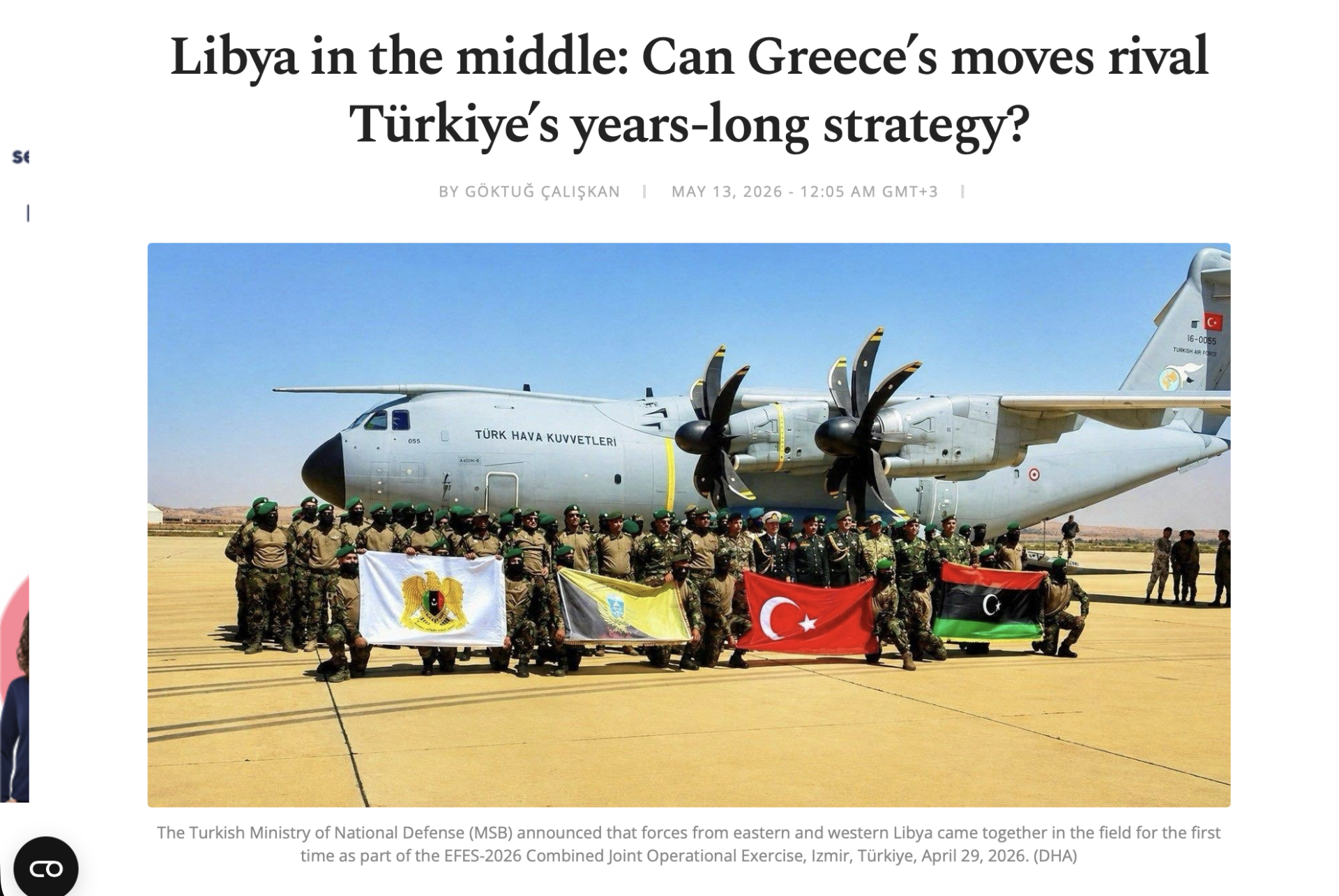
Çalışkan further noted that military training programs and joint exercises conducted under the coordination of the Turkish Armed Forces have significantly reinforced Türkiye’s operational influence in Libya. In addition, the involvement of Turkish companies in reconstruction and infrastructure projects has strengthened Türkiye’s long-term strategic presence in the country.
By contrast, Greece’s approach has largely relied on diplomatic initiatives, international legal arguments, and support from the European Union. Çalışkan assessed that such measures are unlikely, in the short term, to rival Türkiye’s years-long strategy that has been consolidated through direct engagement and sustained activity on the ground.
He concluded that, in the Libyan context, the most influential actor is not merely the one advancing diplomatic rhetoric, but the one capable of providing tangible contributions in the fields of security, training, and economic reconstruction. In this regard, Çalışkan argued that Türkiye currently possesses a significant strategic advantage.