

Turkish Political Scientist: Kazakhstan is Emerging as One of the Key Architects of the New Eurasia
The official visit of the President of Kazakhstan, Kassym-Jomart Tokayev, to Brussels has constituted one of the most significant foreign policy events of the year. Following negotiations with the President of the European Council, António Costa, and the President of the European Commission, Ursula von der Leyen, the parties adopted a Joint Statement on the further consolidation of their strategic partnership.
During the visit, commercial agreements and memoranda valued at over 12 billion dollars were signed. Understandings were reached regarding the development of the Trans-Caspian International Transport Route, alongside cooperation in the domains of critical raw materials, energy, digitalization, and infrastructure. Furthermore, the parties confirmed the conclusion of negotiations concerning agreements on visa facilitation and readmission.
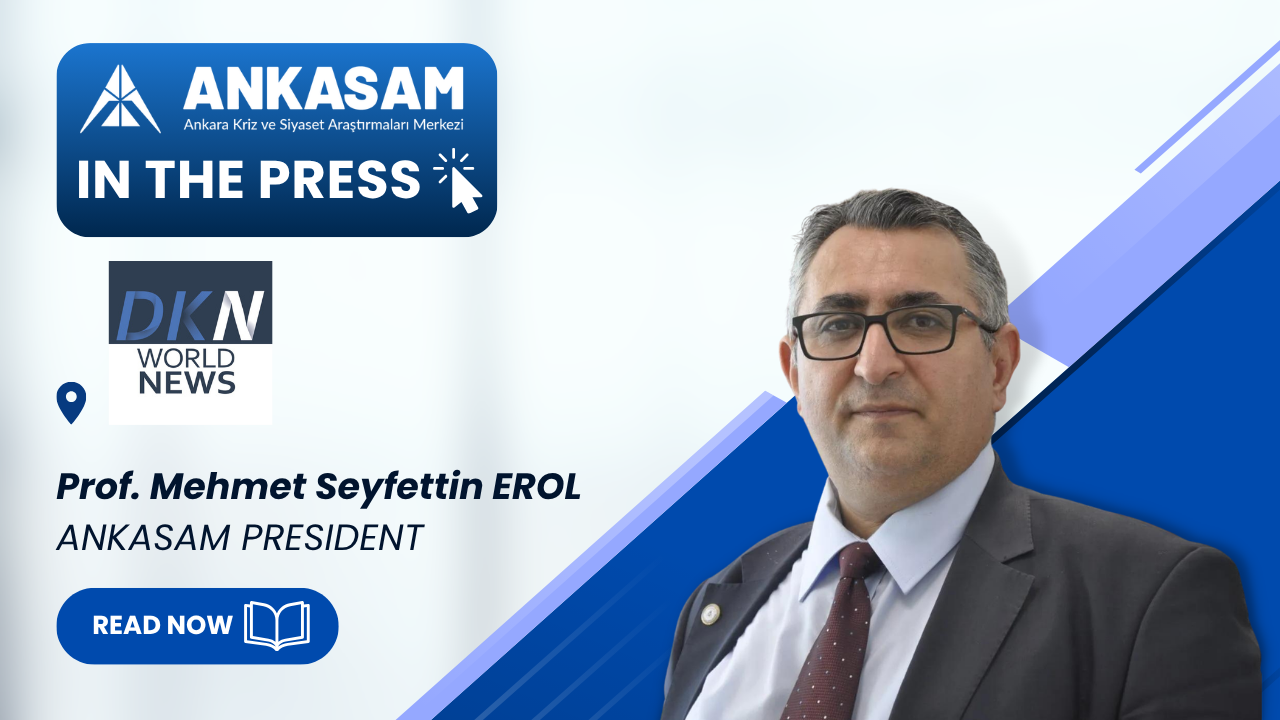
Prof. Dr. Mehmet Seyfettin Erol, President of ANKASAM (Ankara Center for Crisis and Policy Studies) and an expert in international relations and Eurasian geopolitics, evaluated the implications of the visit’s outcomes for Kazakhstan, the European Union, and the broader Eurasian region.
– President Kassym-Jomart Tokayev and European Union leaders adopted a Joint Statement following their talks in Brussels. How significant is this development for relations between Kazakhstan and the EU?
It can be asserted without exaggeration that this represents a historical milestone in Kazakhstan-EU relations. The Joint Statement effectively elevates the bilateral interaction from a framework of regional cooperation to a global strategic partnership.
In a conjuncture where global logistical supply chains are undergoing structural realignment and issues pertaining to energy security and access to critical resources are at the forefront, Kazakhstan is emerging as one of the paramount partners of the European Union. Furthermore, this dynamic encompasses not only the economic dimension but also political trust, institutional engagement, and the collaborative construction of a new architectural framework within the Eurasian space. In my assessment, this document simultaneously serves as an institutional endorsement of the successful reforms and the foreign policy trajectory executed by President Kassym-Jomart Tokayev.
– During the visit, agreements and memoranda exceeding 12 billion dollars were signed. What does this volume of agreements signify?
This signifies a transition in Kazakhstan-EU relations from rhetorical political declarations to an operational partnership.
The executed package of agreements demonstrates a profound level of confidence among the European business community in the Kazakhstani economy and the structural reforms implemented under the leadership of President Tokayev. It is particularly imperative to note that this involves not merely short-term trade, but substantial investments in long-term strategic projects.
We are witnessing concrete initiatives in aviation, transport infrastructure, logistics, digitalization, and industrial development. Collectively, these indicators point to the crystallization of a new phase of cooperation grounded in mutual benefit and deep economic integration.
– European leaders have repeatedly characterized Kazakhstan as a bridge between Europe and Asia. To what extent is this assessment accurate?
Personally, I contend that the concept of a “bridge” no longer encapsulates Kazakhstan’s true strategic role. A bridge implies a passive function of connecting two disparate sides. However, Kazakhstan has long transcended such a limited function. Today, the state operates as an independent and proactive geopolitical center that actively influences the configuration of new transport, energy, and trade corridors.
Kazakhstan constitutes a pivotal element of the Middle Corridor, which is rapidly becoming one of the most vital arteries of connectivity between the East and the West. Additionally, the country is assuming an increasingly prominent role in matters of energy security, the provision of strategic raw materials, and digital interconnectivity. Consequently, I would designate Kazakhstan not as a bridge, but rather as one of the central strategic nodes of the new Eurasia.
– Which domains of cooperation between Kazakhstan and the EU harbor the greatest potential in the forthcoming years?
Primarily, these include critical raw materials and the advancement of the Middle Corridor. To actualize the European green transition, strategic resources such as lithium, rare-earth elements, and uranium are indispensable. Kazakhstan possesses a substantial proportion of these reserves and has the capacity to position itself as a central supplier for European industry.
However, it is particularly crucial that Astana is not merely proposing the export of raw commodities, but is rather advocating for the establishment of high-value-added manufacturing facilities and the enhancement of domestic processing capabilities. This constitutes a fundamentally innovative approach.
The secondary trajectory involves the development of transport routes traversing the Caspian Sea, the Caucasus, and Central Asia. It is precisely this synthesis of resource wealth and logistical capacity that has the potential to serve as the bedrock of a long-term strategic partnership between Kazakhstan and the European Union.
– Ursula von der Leyen highlighted that the volume of trade between Kazakhstan and the EU has more than doubled over the past decade. What do such appraisals by European leaders indicate?
Such assessments bear witness to a profound paradigm shift in Kazakhstan’s international status. Contemporary Kazakhstan is perceived not merely as a supplier of raw materials or a peripheral regional actor, but as a sovereign state that exercises tangible influence over macroeconomic and geopolitical processes across Eurasia.
It is especially noteworthy that in Brussels, Kazakhstan is regarded as a reliable and predictable ally. This constitutes highly invaluable political capital amidst prevailing international turbulence. Essentially, one can argue that Kazakhstan is evolving not only into a participant in the international agenda but also into one of its formative centers.
– Many observers attribute the augmentation of Kazakhstan’s international authority to the initiatives of President Kassym-Jomart Tokayev. How do you evaluate his role?
The role of President Tokayev in this overarching process is immensely significant. Leveraging his diplomatic acumen, he has successfully cultivated an effective framework of relations with diverse centers of power—including the European Union, China, the United States, Russia, and regional actors.
Concurrently, Kazakhstan is executing a comprehensive agenda of political and economic reforms designed to foster transparency, consolidate the rule of law, and cultivate an optimal investment climate. It is precisely this synergy between internal structural transformations and a proactive foreign policy that has enabled Kazakhstan to significantly fortify its international standing.
– To what extent does Tokayev’s multi-vector policy contribute to the reinforcement of relations with the European Union?
In my estimation, it is precisely this multi-vector diplomacy that functions as one of the primary catalysts for Kazakhstan’s contemporary diplomatic success.
In an environment characterized by escalating systemic competition among global power centers, Kazakhstan has managed to sustain constructive engagements with all its principal partners while consistently safeguarding its own national sovereign interests. For the European Union, variables such as predictability, pragmatism, and steadfast adherence to international law are especially paramount. Kazakhstan exemplifies all of these attributes.
As a corollary, the country has evolved into one of the most reliable and sought-after partners for the EU in Central Asia. Today, Kazakhstan is recognized as a state capable not only of adapting to macroscopic global shifts but also of actively participating in calibrating the new balance of power across the entire Eurasian spatial domain.