Leadership Stability Fosters a Sense of Trust, Expert Asserts
Victor Maylin | July 8, 2026
Political Scientist Mehmet Seyfettin Erol: Constitutional Continuity Enables Kazakhstan to Bring Reforms to Their Logical Conclusion
The Constitutional Court of Kazakhstan has provided an official interpretation of the provisions of the 2026 Constitution upon the President’s request. The Court clarified that individuals who held office under the 1995 Constitution may be elected or appointed to analogous positions following the entry into force of the new Constitution on July 1, 2026.
The ruling stipulates that the restrictions outlined in the 2026 Constitution apply exclusively to elections and appointments conducted after its enactment. Consequently, the duration of tenure in respective offices and appointments made while the 1995 Constitution was in effect are not taken into account.
Thus, the Constitutional Court’s decision solidifies the principle of legal continuity and the applicability of the new constitutional norms to future political and legal processes. Amidst the large-scale transformation of state institutions, the consistency of reforms acquires particular significance: initiated transformations necessitate time, sustained political will, and the opportunity to bring them to a logical conclusion.
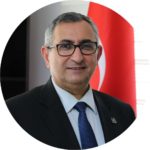
Professor Dr. Mehmet Seyfettin Erol, President of ANKASAM (Ankara Center for Crisis and Policy Research), expounded on the implications of the Constitutional Court’s ruling for Kazakhstan’s political stability, institutional development, and international perception.
— The Constitutional Court’s decision paves the way for the application of new constitutional norms to future elections. How do you assess the significance of this decision in terms of Kazakhstan’s long-term political stability and institutional development?
— The ruling of the Constitutional Court of Kazakhstan regarding the application of the new Constitution and electoral processes represents a historic milestone in the country’s institutional transformation trajectory. In this context, the Court’s decision establishes a structural foundation that ensures Kazakhstan’s long-term political stability and deepens its institutional development.
It is widely recognized that the primary guarantor of stability in modern state systems is the predictability of rules and legal mechanisms that function independently of individuals. In this sense, the Constitutional Court has reaffirmed the principle of the rule of law at the highest level, facilitating the full application of the new constitutional provisions to prospective elections.
The fact that political transitions and electoral processes are rendered unequivocal, impervious to arbitrary interpretation, and secured by constitutional guarantees ensures the uninterrupted operation of the state apparatus, even during potential periods of crisis.
Under the new constitutional order, mechanisms aimed at enhancing public participation in decision-making have acquired constitutional status. This judicial ruling definitively established that these vital institutional modifications will directly manifest in practical electoral processes. Unambiguous legal frameworks prevent abrupt systemic shocks within domestic political dynamics, thereby renewing the relationship of trust between the state and society.
Furthermore, in the contemporary era of global uncertainty and geopolitical fault lines, this decision possesses a profoundly strategic dimension that transcends state-society relations. The consistency and resolve demonstrated at the constitutional level elevate Kazakhstan’s reliability and international prestige.
In an epoch where the global system is navigating a profound vortex of chaos and insecurity, only states that fortify their legal infrastructure can safeguard their own resilience and emerge as influential actors in the global arena. This historic decision signals to the external world that Kazakhstan is not governed by the whims of shifting geopolitical winds, but rather progresses under the guidance of visionary leadership committed to institutional principles.
By bolstering the country’s international reputation, such institutional maturity creates the requisite foundation for constructing a stronger, more secure Kazakhstan—a nation whose sovereignty remains inviolable and which becomes increasingly resilient to global risks.
— President Kassym-Jomart Tokayev has repeatedly emphasized the importance of the consistent implementation of political reforms. How critical is leadership continuity for the successful execution of such large-scale transformations?
— The consistent trajectory of political reforms, frequently articulated by President Kassym-Jomart Tokayev, can only attain sustainability through robust administrative stability and leadership continuity.
Extensive social, political, and economic transformations inherently encounter bureaucratic resistance, the legacy of the preceding system, and structural impediments. The permeation of such comprehensive reforms across all echelons of the state—rather than remaining confined to paper—is directly contingent upon the continuity of the political will driving them.
Undoubtedly, frequent leadership turnovers engender a fracture in strategic vision, interruptions in implementation, and a loss of the necessary reformative momentum. As is generally posited in political science, the formula of “change through continuity” constitutes the most sound methodology in institutional building processes.
Leadership stability fosters a sense of trust and predictability within both the state apparatus and society. During the implementation phase of reforms, the bureaucracy executes transformational tasks more efficiently and with less resistance when it perceives a resolute, long-term administrative will.
Moreover, the success of this large-scale transformation on the global stage is intrinsically linked to the concepts of continuity and decisive leadership. In today’s climate of unpredictable alliances and conflicts, even the slightest vulnerability or vacuum in leadership can engender conditions conducive to external interference and jeopardize state resilience.
Consequently, continuity under the aegis of a visionary leader instills enduring confidence in international partners and safeguards the state’s global reputation. In a geopolitically pivotal country like Kazakhstan, the uninterrupted continuation of reforms consolidates its standing as a regional power.
The presence of resolute and formidable leadership serves as the most strategic shield, protecting the country from the waves of global uncertainty. Every stride in this direction serves the vision of a more secure, stable, and prosperous Kazakhstan, liberated from internal and external threats, and empowered to independently determine its own future.
— It is widely acknowledged across many nations that major reforms demand not only political will but also time. How imperative is it that a leader who has initiated a comprehensive transformation of the state has the opportunity to bring these reforms to their logical conclusion?
— Global history is replete with instances where nations were plunged into periods of uncertainty due to reforms left incomplete or delayed as a consequence of leadership changes.
Structural reforms can be likened to laying the foundation of a building: it is absolutely crucial that the same presiding will remains at the helm of the project until the roof is erected and the internal structuring is completed in accordance with the architect’s design.
The fact that a leader who has initiated comprehensive state transformations is afforded the time and capacity to bring these reforms to their logical conclusion is of vital importance for the integrity of the vision and the internal consistency of policies.
The reform process does not culminate with the mere enactment of legislation. It takes years for these laws to become institutionalized, embraced by society, and integrated into civic culture. The leader who spearheaded the reformist movement is best positioned to comprehend where the system encounters obstacles, which balances must be preserved, and how societal dynamics respond.
A change in leadership midway through the process poses the risk of squandering all the resources and efforts invested up to that point.
Without a doubt, the leader’s ability to see the initiated transformation through to completion is a matter of strategic resilience, given the anarchic and unpredictable nature of the international system. Global actors take seriously those states that demonstrate consistency in their internal organization and continuity during the reform implementation phase. This bestows upon the country considerable prestige and negotiating leverage on the global stage.
Unfinished reforms breed conditions for internal and external chaos, whereas the determination of a visionary leader to bring the process to its logical conclusion projects an image of a resilient, rather than fragile, state to the outside world.
This process aims to mold Kazakhstan into an actor that is immune to global upheavals, self-sufficient, and possesses a definitive voice in international partnerships. Consequently, these strategic measures and decisions are the most concrete indicators of the emergence of a substantially stronger, more secure, stable, and prosperous Kazakhstan of tomorrow.
— In your view, how might the international expert community perceive the Constitutional Court’s decision within the context of the development of Kazakhstan’s political system? What signals might this convey to the country’s international partners?
— International experts and global analysts who closely monitor Central Asia and Eurasia perceive this ruling by the Constitutional Court of Kazakhstan as a substantial stride toward the country’s political maturation and institutional modernization process.
Such assessments are well-founded, as they reflect an accurate analysis of the situation. Western and regional think tanks also recognize that the active functioning of constitutional mechanisms and legal predictability are rare and highly valuable dynamics for Central Asia.
The Court’s decision broadcasts a signal that Kazakhstan is advancing toward a rules-based state model—one that is committed to international obligations, governs its domestic law with institutional transparency, and distances itself from arbitrary governance models.
For global capital and international partners, the paramount criteria are stability and predictability. The clarity introduced by the Constitutional Court regarding electoral processes demonstrates that political risks in Kazakhstan are being minimized and that the legal infrastructure is robustly safeguarded. This serves as crucial validation that foreign direct investment in the country will be protected.
Furthermore, when analyzing this process through the lens of the international system, this decision is a component of a multidimensional strategy that fortifies the state’s reliability, diplomatic prestige, and geopolitical clout in the external world.
During periods of global uncertainty, foreign partners seek to forge long-term alliances with actors that guarantee consistency in domestic policy and continuity in governance. With this decision, strong and visionary leadership has declared to the world that Kazakhstan maintains its resolve and unwavering commitment to implementing its macro-strategic decisions.
Such a declaration directly bolsters state resilience, enhancing its capacity to defend national interests. The clear and potent signals dispatched to global actors ensure that Kazakhstan is recognized—not only within its own geographic sphere but on a global scale—as a rising center of power and a stronger, more secure, stable, and prosperous partner.
— Under the conditions of the new constitutional system, could President Kassym-Jomart Tokayev’s potential participation in future elections be viewed not merely through the prism of an individual politician’s persona, but also as a reflection of the public’s assessment of the ongoing reform course?
— Within the framework of the new constitutional system, President Kassym-Jomart Tokayev’s prospective participation in future elections certainly cannot be reduced to an ordinary leadership contest or the candidacy of an isolated political figure.
During his tenure as President, Tokayev has propelled Kazakhstan into a new phase wherein oligarchic structures are systematically dismantled, social justice is prioritized, and the divide between the state and the populace is narrowed.
Therefore, the possibility of his participation in the elections will inherently function as a de facto referendum on the profound institutional reforms he initiated, the steps toward economic modernization, and the ideal of a “Just Kazakhstan.”
When citizens proceed to the ballot boxes, they will not merely be electing a president. Simultaneously, they will be voting for a new state trajectory that affirms a departure from obsolete governance habits, the institutionalization of anti-corruption measures, and the implementation of social policies directed at broader segments of the population.
Undoubtedly, the public support consolidating around Tokayev’s prospective leadership acts as a shield of internal resilience, fortifying the domestic front and significantly amplifying the country’s standing in international relations.
In an era where global uncertainty has reached its zenith, resolute, formidable, and visionary leadership that commands the sustained trust of the people constitutes the most critical source of resilience against external pressure.
This societal consistency, manifesting in the harmony between the state and the people, directly strengthens Kazakhstan’s negotiating position, its global prestige, and its credibility in foreign policy.
This is precisely the fundamental objective of the process: to construct a governance system whose domestic legitimacy is validated by public support, and whose geopolitical weight abroad is acknowledged by international partners.
Under the umbrella of this visionary leadership, the decisions rendered and the strategic steps taken make the formation of a stronger, more secure, stable, and prosperous Kazakhstan—one that looks confidently toward the future—inevitable.