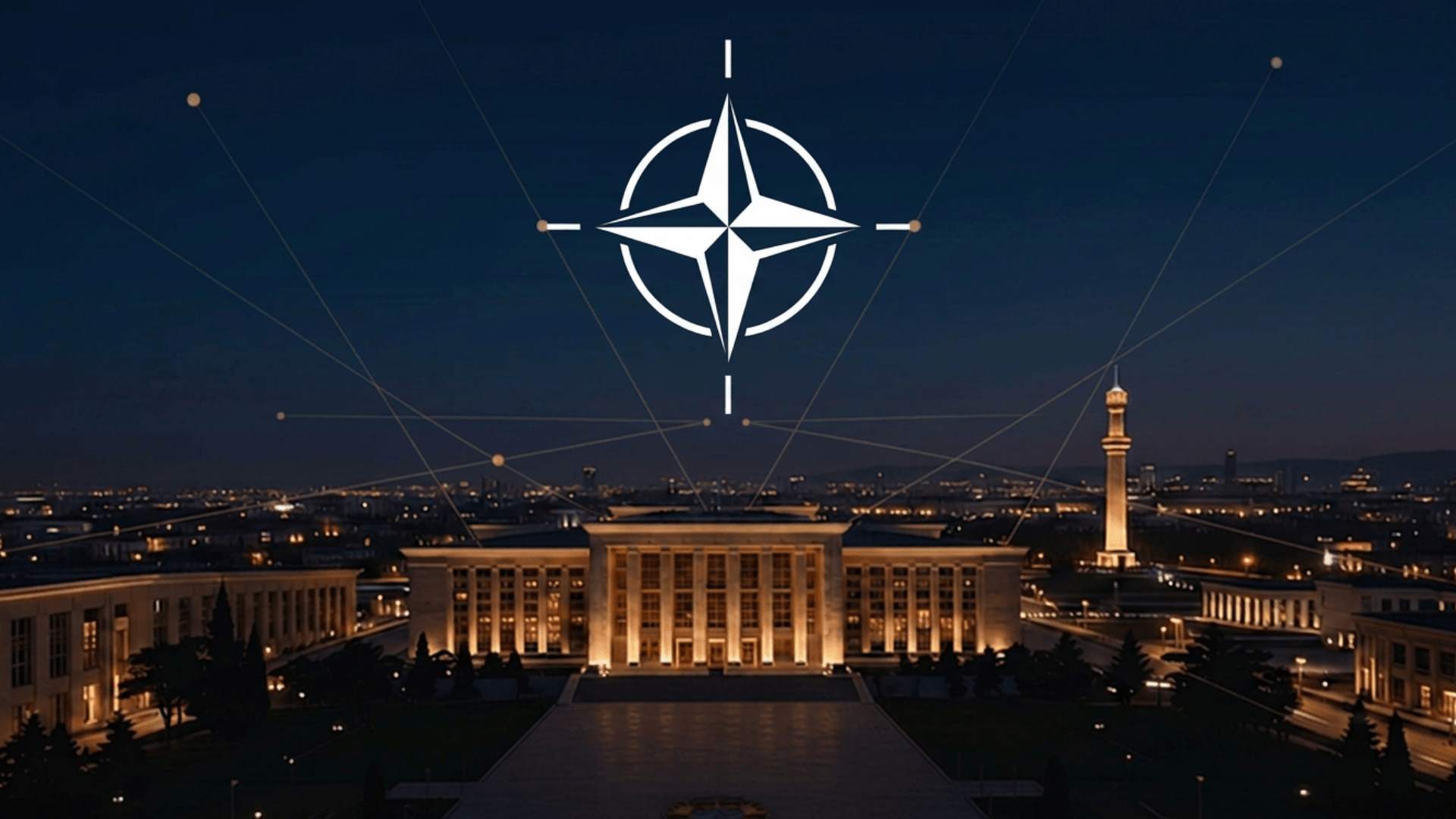


The historic 36th NATO Leaders’ Summit, held at the Presidential Complex in Ankara, marked a milestone that shook geopolitical balances by formalizing the “NATO 3.0” transformation, under which the alliance shifted the burden-sharing to Europe. While this summit announced the shift of the transatlantic alliance’s military and logistical center of gravity to Türkiye, Israel experienced in Ankara the most severe shock of isolation and strategic defeat on the global diplomatic front in recent years. Israel’s attempts to obstruct, sabotage, and divert attention from the summit largely proved fruitless.
The Ankara Summit Declaration, along with U.S. President Donald Trump’s moves, has elevated Ankara to the status of a global center of balance and a stabilizing actor, while dragging the Tel Aviv administration into a state of historic helplessness and deep isolation. For the first time, the Western world has begun to reevaluate its Israel-centric security policies.
Where Did Israel Stand at the NATO Summit in Ankara?
Although Israel is not an official NATO member, it has maintained a strategic partnership with the alliance for many years through the “Mediterranean Dialogue” However, at the historic summit in Ankara, Israel was not seated at the table but was positioned as an external threat seeking to sabotage the decisions made there. In this context, the outcomes of the Ankara NATO Summit regarding Israel can be summarized as follows:
- The Collapse of Lobbying Efforts: The Jewish lobby first engaged in intensive diplomatic efforts to prevent US President Trump from visiting Ankara. When that failed, it pressed for Trump to travel to Tel Aviv immediately after his visit to Ankara; however, this request was also flatly rejected by Washington.
- Attempts at Diplomatic and Military Sabotage: Having failed to prevent the Trump-Shara meeting, which took place under Türkiye’s mediation, Israel intensified its attacks on Syria’s Deraa and Quneitra fronts and on Lebanon in tandem with the summit. During the same period, it sought to overshadow the diplomatic success of the Ankara Summit by escalating tensions in the Strait of Hormuz.
- The Shock of the Post-Summit Cancellation: US Defense Secretary Pete Hegseth’s unexpected cancellation of this critical trip which was scheduled to take him to Tel Aviv to discuss the F-35 and Iran following his meetings in Ankara was one of the biggest diplomatic blows ever dealt to Israel.
While the Israeli government and media have characterized this event in Ankara as a sort of “rehearsal for a return to the Ottoman era,” admissions in leading media outlets such as the Maariv newspaper including statements like “We are suffering our worst defeat since 1947. We’ve been slapped in the face by Türkiye” have clearly revealed the wave of panic in Tel Aviv.
The Hidden Meanings of the Ankara Declaration and Israel’s Response
The Ankara Summit Final Declaration contains provisions that directly undermine Israel’s regional plans and security perceptions. While the declaration fully reflects Türkiye’s sensitivities regarding the fight against terrorism, it reaffirms that Iran must not possess nuclear weapons and calls for full respect for freedom of navigation in the Strait of Hormuz. However, these decisions were met with great dissatisfaction by Israel.
This is because Israel had been demanding that NATO open a full-scale military front against Iran and that allies provide unlimited logistical support for US operations in the region. Indeed, during the summit, Trump harshly criticized some European allies, such as Spain and the United Kingdom, for not allowing their bases to be used in US attacks against Iran. NATO’s emphasis on “collective defense” and “regional stability” rather than conventional warfare has undermined Israel’s strategy of using the alliance as a shield for its own security.
The New Landscape of Power Balances in the “Türkiye-Israel-US Triangle”
Consequently, it can be argued that the new NATO process in Ankara has begun to fundamentally shift the asymmetric balance of power within the “Türkiye-Israel-US Triangle” in Türkiye’s favor. The key factors in this new balance of power can be listed as follows:
- In the context of the defense industry and the F-35 program: Türkiye has been promised the lifting of CAATSA sanctions, paving the way for the initial delivery of six F-35s. In response, Israel is scrambling to block these deliveries out of concern that its military superiority will be compromised. The US, under Trump’s leadership, has moved toward completely lifting the sanctions, praising Türkiye’s loyalty to the principles of alliance.
- In terms of regional leadership: Türkiye has been positioned as the primary mediator and stabilizing force in the Middle East, most notably through the Shara talks in Syria. Israel, on the other hand, has been pushed outside the regional equation and has been reduced to a position where it is forced to resort to military sabotage. The US has adopted a vision of working with strong regional leaders, such as President Erdoğan, to reduce its financial and military burden in the region.
- As for the balance of power within NATO: Türkiye is recognized as a main pillar that fills Europe’s security gaps and possesses billions of dollars’ worth of domestic production capacity. Israel, on the other hand, now runs the risk of being viewed by the alliance merely as a “security burden” and a “source of regional instability.” The US, meanwhile, is pursuing a strategy of shifting the burden entirely to its allies those that are productive and powerful while maintaining the transatlantic bond.
Washington’s Realpolitik Choice: Why Is Trump Dependent on Ankara?
The fundamental dynamics behind the Trump-led US being forced to either side with Ankara or pursue a much more pragmatic, rational policy in the context of Türkiye-Israel relations can be listed as follows:
- Cost-Conscious Foreign Policy and Avoiding Military Burdens: Trump is firmly opposed to American troops being worn down in endless overseas wars and to the U.S. budget being drained in the Middle East. Israel’s efforts to escalate regional conflicts and drag the US into an all-out war with Iran are diametrically opposed to Trump’s commercial rationality.
- Superior Production and Logistics Capabilities: Türkiye has raised the localization rate in its defense industry to unprecedented levels and has become a global power in UAV/UCAV technologies and ammunition production. At a time when the Western world is experiencing production crises, Türkiye occupies an irreplaceable position as a logistics and military hub along the “Ukraine-Syria-Caucasus” corridor. Israel, which constantly demands grants and military aid, offers no added economic value to Washington.
- The “America First” Policy: Israel is dealing a major blow to the US’s global image and perception particularly in the Middle East-centric Islamic world, as evidenced by the concrete example of the Gaza/Sumud Fleet. Israel is causing immense harm to US interests, narrowing the US’s geopolitical horizon and room for maneuver, and emerging as one of the biggest obstacles to Trump’s “America First” policy.
- Diplomatic Solution and Mediation Power: Ankara is the only actor capable of achieving concrete results at the negotiating table, thanks to the bridges it has built with the Shara administration in Syria, its policy of balancing between Russia and Ukraine, and its influence in the Islamic world. To resolve global crises, Trump must work with “get-things-done” leaders, and President Erdoğan is the strongest representative of this profile.
Theopolitical Revision: The Need for Rationality and Composure in the “Abraham Accords”
Consequently, it appears that all these developments will have certain implications in the context of the “Abraham Accords” in the coming period. In other words, on the geopolitical level, a radical revision of the “Abraham Accords” Project, which was carried out with great fanfare during Trump’s first term and aimed to bring Israel and the Arab world closer together is now inevitable under current conditions. If Trump were to adopt a more measured, level-headed, gradual, and rational policy on this matter, it would contribute much more positively and sustainably to US-Middle East relations.
Indeed, Israel’s aggressive expansionist policies have completely shattered the myth of “regional peace” that forms the theopolitical foundation of the “Abraham Accords.” If Trump were to slow down this process in a rational and balanced manner, without rushing it, it would quell anti-American anger in the Arab world and expand Washington’s diplomatic room for maneuver in the region.
Instead of a “Messianic” and impositional theopolitical approach centered on Jerusalem, a slower, more measured revision that takes into account the sensitivities of actors with deep-rooted state traditions such as Türkiye will ensure the establishment of sustainable stability in the region. Otherwise, insisting on the current aggressive format of the Abraham Accords will serve no purpose other than to further trigger the theopolitical fault lines in the Middle East, deeply affecting not only the Middle East but also the relevant regions and their leaders.
The New Geopolitical Landscape in the “Central Belt”
When the decisions emerging from the summit, the leaders’ messages, and the reactions on the ground are taken together, “Northeast Africa” also referred to as the “Central Belt” or the “Afro-Eurasian Transit Corridor” “Eastern Mediterranean,” and “Middle East Triangle” a new map emerges in which the centers of hegemony have shifted. Specifically:
- The Ankara Axis in the Eastern Mediterranean: Türkiye’s initiatives in the domestic defense industry and its growing standing within NATO are rendering Greece and Israel’s unilateral energy and security projects in the Eastern Mediterranean (such as EastMed) completely ineffective. The procurement of Eurofighter Typhoons and the comprehensive security pact signed with the United Kingdom are reinforcing Ankara’s deterrence at sea.
- A Shift in the Siege in the Middle East: The US’s desire to reduce its conventional military presence in the region is converging with the consolidation of the new regime in Syria (the Shara administration) along the Türkiye axis. This situation is increasing the encirclement pressure felt by Israel along its northern borders (the Syria-Lebanon line).
- Security in Northeast Africa and the Red Sea: NATO’s sensitivity regarding the Strait of Hormuz and energy routes aligns geopolitically with Türkiye’s military presence in the Horn of Africa, stretching from Somalia to Libya. Israel, meanwhile, is becoming increasingly dependent on the boundaries set by Ankara regarding its commercial and military activities in the Red Sea and the Suez Canal corridor.
Forcing God to Bring the Apocalypse in the New Age of Realpolitik!
The Ankara NATO Summit has officially declared the end of the old Middle East order, which was built on ideological obsessions and geopolitical dogmas. Israel’s “Zionist/Messianic Geopolitics,” centered on the “Promised Land,” has strategically retreated in the face of Ankara’s rational statecraft, massive defense industry capacity, and game-changing diplomacy.
The fact that the US under the Trump administration has also recognized this reality and shifted toward a more level-headed, pragmatic, and Türkiye-focused axis is opening the doors to a new era of balance in the global system. In the coming period, a brand-new “realpolitik order” is being built one centered on Ankara, where production power, geographical superiority, and rational diplomacy prevail, rather than rhetorical alliances.
In this context, Israel has very few options available. This “lack of options” could lead to very different, irrational outcomes for both the region and the world. Frankly, this carries the same meaning as Israel’s mindset of “forcing God’s hand.”