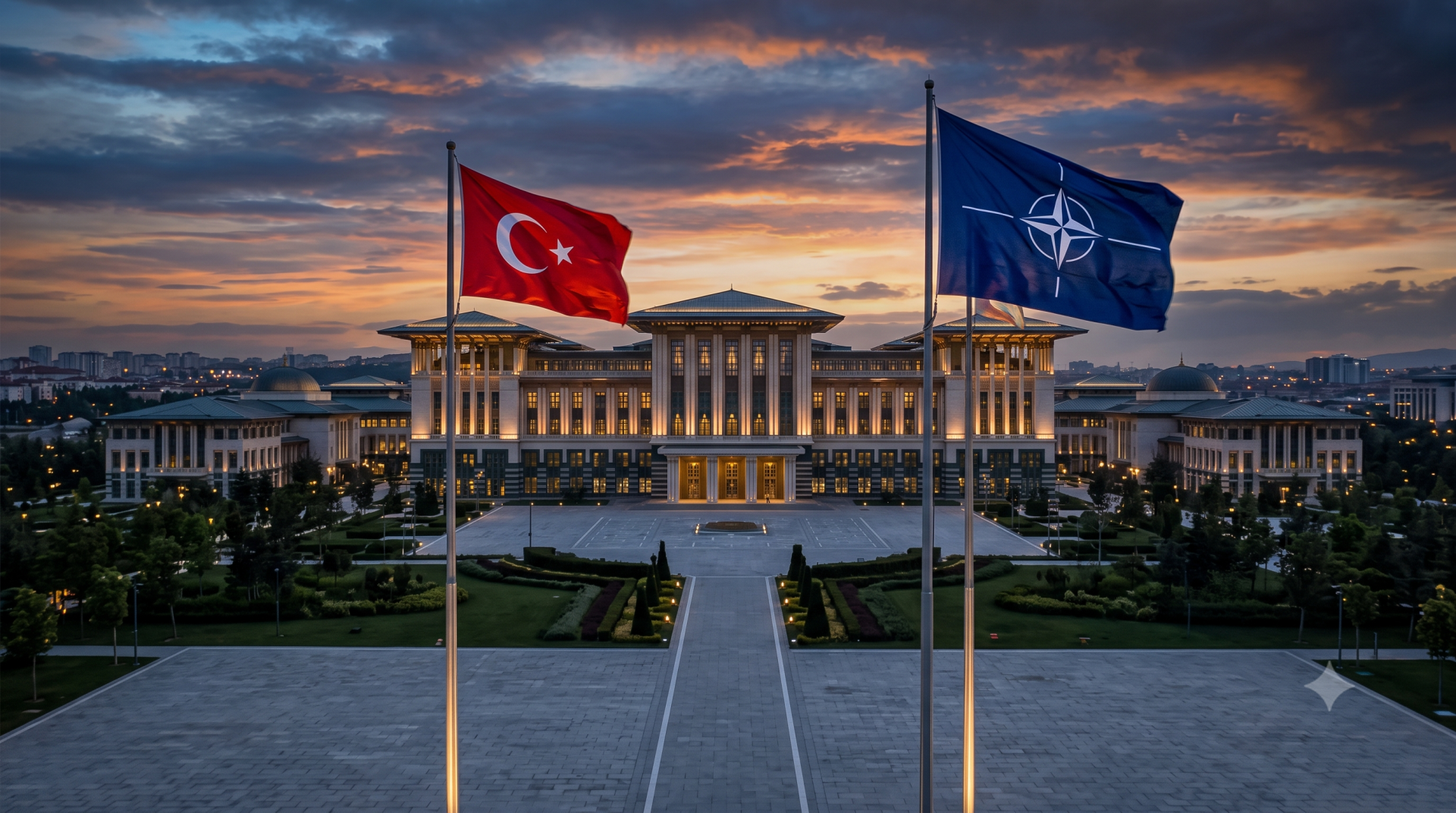


The 36th NATO Summit of Heads of State and Government, held in Ankara on July 7-8, 2026, was a historic turning point that reshaped the transatlantic security architecture at a time when global geopolitical fault lines were fractured. The leaders of the 32 allied countries, meeting at the Presidential Palace, reaffirmed their unwavering commitment to Article 5 of the Washington Treaty and the collective defense commitment in the Ankara Summit Declaration.
In this context, the confirmation of the key observations and predictions I made in my polemical and strategic analyses prior to the Summit, particularly through the decisions taken in Ankara and the messages given by the leaders, including the “NATO Ankara Agreement,” makes an analysis of the subsequent process inevitable. Because with this Summit, the discussions within the organization have been frozen, at least for a considerable period. Furthermore, we are witnessing a process in which the cards and roles are being quietly reshuffled in accordance with the new global reality, and “Pandora’s Box” has been opened in the process of establishing a “New NATO.”
Indeed, this Summit represents a turning point where Cold War paradigms have ended, allies have established their own regional sub-security umbrellas (like the EU NATO) with a 5% target for defense spending, and a new, technology-focused collective defense logic equipped with nuclear/cyber elements has taken root. Türkiye, by breaking free from the CAATSA constraints, has proven itself to be both an impenetrable fortress on the alliance’s eastern flank through joint missile production and F-35/KAAN integration, and the most strategic “Joker” actor capable of resolving impasses through its current diplomacy.
Therefore, this analysis examines the outcomes of the Summit, the Alliance’s future institutional transformation, priority geopolitical areas, and Türkiye’s central role in this new equation from a multi-dimensional perspective.
Türkiye’s Axis Role in the Global Distribution Balance
In my article titled “The Transformation of the Transatlantic Security Architecture and ‘Wildcard Membership’,” published prior to the summit, I argued that the global power struggle would acquire a flexible, multi-vector, and fluid character instead of rigid blocs. The Ankara Summit has proven that Türkiye has become NATO’s most critical “Wildcard Member,” precisely in line with this geostrategic definition. The intense diplomatic activity conducted as the host country acted as a catalyst, opening up the Alliance’s clogged arteries.
The Trump-Erdoğan Summit and the Breaking of the CAATSA Shackles
The most radical bilateral diplomatic outcome of the summit was the one-on-one and delegation-level meetings held at Beştepe with US President Donald Trump. Trump’s announcement on the sidelines of the summit that unilateral sanctions against Türkiye (CAATSA) would be lifted and that he would give the green light again for the procurement of F-35 fighter jets and jet engines demonstrates that the transatlantic alliance has been placed on a rational footing and that both states and their leaders have initiated a controlled/gradual process against a few countries that are likely to sabotage Turkish-American relations. This development confirms that Türkiye remains an unshakeable part of the Western security umbrella while simultaneously maximizing its institutional bargaining power by preserving its strategic autonomy. My “Joker Member” thesis, presented before the summit, has found full strategic resonance in Ankara with concrete steps such as the lifting of CAATSA sanctions and the approval of F-35s during the Trump-Erdoğan meeting.
In the period that follows, although pragmatic relations centered on NATO in Turkish-American relations will likely be discussed more in the context of Türkiye’s balanced, multifaceted relationships, its internal logic and dynamics will also be reformulated in the face of geopolitical realities. Therefore, after the NATO Summit, a process is underway in which the “Ankara Axis” is based on stronger, more balanced, and more rational foundations in the context of East and West.
Indeed, Türkiye’s role as a “wildcard” actor has not only provided military flexibility on the ground, but has also transformed Ankara into a key decision-maker in NATO’s future institutional structure and command reforms. In the upcoming NATO Secretary General elections and the restructuring of the Alliance’s southern flank command structure, Türkiye has gained institutional leverage to ensure the selection of a leadership profile compatible with its national security, using its veto power and strategic weight. It would perhaps come as no surprise if the new NATO Secretary General were a Turk.
A New Paradigm in Burden Sharing
The summit’s institutional restructuring decisions fully confirm my earlier thesis, “Germany’s Return to its Historical Codes: The ‘Merz Doctrine’ and the ‘EU NATO’.” Trump’s chronic pressure on European allies for “material and military burden sharing” was countered with concrete structural commitments at this summit. Under Chancellor Merz’s leadership, the Berlin government has completely abandoned its historical military hesitancy and demonstrated its will to shoulder Europe’s conventional defense burden.
In addition, the leaders formally implemented the Hague Defence Commitment, which mandates that European allies and Canada increase their core defence investments by more than $139 billion. The commitment to moving towards the historic 5% defence spending-to-GDP threshold was further solidified by over $50 billion in new joint procurement agreements aimed at deepening defence industry cooperation.
As you may recall, in my analysis titled “NATO as an Alliance in a Two-Axis Pincer: The ‘2026 Ankara Summit’ and Strategies for Exiting the Crisis,” I stated that NATO was caught in a two-axis pincer movement: Trump’s isolationist/transactional policies in the west and the revisionist challenges of the Russia-Iran axis in the east. The Ankara Summit, in this context, has gone down in history as a summit where technological superiority and defense industry integration were chosen as exit strategies from this pincer movement/crisis. The new procurement packages exceeding $50 billion and the commitment to expanding collective production capacity announced at the summit demonstrated that the main engine for extricating the alliance from this two-axis pincer movement is a “defense economy.” By pledging to remove defense trade barriers (embargoes and restrictions) between allies, the alliance acknowledged that exiting the crisis is only possible by institutionalizing internal solidarity at the commercial and military-industrial levels.
This situation, on the other hand, also signals the institutionalization of an “EU NATO” sub-structure and a European-centered military coalition in the defense of the continent, in response to Washington’s shifting attention to the Asia-Pacific. Thus, the formation of an “EU NATO” that I envisioned in the European structure, and Germany’s military doctrine transformation, have materialized with the increase in allied spending by billions of dollars through the Hague Pledge. On the other hand, it is worth noting that the new radical 5% target for defense spending adopted at the Ankara Summit has the potential to trigger a serious socio-economic crisis in the domestic politics and budget planning of European allies, and is the biggest micro-dynamic that will test the financial sustainability of the “EU NATO” project in the coming period.
NATO 3.0: Operational Coalition Ready for War
The Ankara Summit has been the arena where the concept I have conceptualized in my analyses published under the umbrella of ANKASAM, “The Fragmentation Phase of Globalization: The ‘Regional NATO-ization’ Phenomenon,” has taken concrete form. The Alliance is transforming from a cumbersome, dynamic security club in peacetime into a regionally focused military coalition, ready for war and equipped with high-technology integration, in line with the “NATO 3.0” vision.
As clearly emphasized in the statement, it has been decided to blend nuclear, conventional, and missile defense capabilities, supported by space and cyber elements. The Alliance is developing a global “transatlantic combat cloud” that will ensure full compatibility among allied militaries and integrating advanced artificial intelligence models into command and control mechanisms. The broad-based security concept brought about by globalization is giving way to rigid and fragmented military zones focused on precision strikes in depth, unmanned systems, drone mass deployments, and integrated air-missile defense projects. This institutional identity change within NATO proves that the regional focus I envisioned is transforming into a military reality through the integration of cyber, space, and artificial intelligence.
Furthermore, the economic and political polarization of the global system is transforming military structures from homogeneous global organizations into clusters of “regional sub-alliances.” The risk definitions and target geographies reflected in the Summit’s final declaration attest to this fragmentation. Instead of offering a universally applicable global security umbrella, the Alliance has focused on specific crisis lines. In this context, the high-level invitations extended to countries such as Japan, South Korea, Australia, and New Zealand demonstrate that instead of a single global NATO, a “Regional NATOization” model, integrated with regional security architectures, is being implemented.
“Wildcard Membership” and “Flexible Alliance” Models
In my studies titled “NATO as an Alliance in a ‘Two-Axis Pincer’: ‘The 2026 Ankara Summit’ and Crisis Exit Strategies” and “The Fragmentation Phase of Globalization: The Regional NATOization Phenomenon, the Transformation of the Transatlantic Security Architecture, and ‘Wildcard Membership’”, I wrote that due to the deep chasms between the national interests and threat perceptions of the allies, the cumbersome structure of Article 5 would be bypassed, and the allies would assume “task-based/flexible” asymmetric responsibilities. Trump’s stance before and during the Summit, based on the argument that European allies were not providing sufficient logistical and military support to the US-Israel operations against Iran, paved the way for flexible coalitions that did not extend to all allies. In areas such as cyberspace, artificial intelligence infrastructure, and deep precision strikes, allies are being positioned as “Wildcard Members” according to their capabilities.
“The Russian Threat” and Uninterrupted Funding for Ukraine
The Alliance’s strategic orientation, as I described in my work “NATO as an Alliance in a Two-Axis Pincer: The 2026 Ankara Summit and Crisis Exit Strategies,” is based on managing a geographical reality squeezed between Russian revisionism in the East and terrorism and regional wars in the South. To overcome the crisis on the eastern axis, unwavering support for Ukraine has been reiterated; European allies and Canada have pledged to provide Kyiv with €70 billion in military equipment, aid, and training by 2026. It has been decided to act jointly through the EU’s “Ukraine Support Loan” mechanism to ensure the sustainability of this financial burden.
Furthermore, groundbreaking steps have been taken, such as granting Ukrainian President Zelenskyy a license to produce critical US-made Patriot air defense missiles in his own country. While the idea that offensives deep into Russia would serve as a basis for negotiations to end the war gained traction, “Deep Precision Strike Capabilities” and “Ground-Based Precision Strike Capabilities” projects, capable of pinpoint strikes from 300 kilometers to over 2000 kilometers, were signed among the allies. These multinational projects aim to transform the Alliance’s eastern flank into an impenetrable military fortress. These crisis strategies have confirmed the Alliance’s search for a way out of its two-pronged grip, as I mentioned before the summit, and have materialized in the massive support packages worth billions of euros given to Ukraine and the signed missile defense projects.
The most radical shift in the target country and region matrix of the Ankara Summit occurred on the southern axis, that is, in the Middle East. Held in the shadow of the hot war between the US and Israel and Iran, the summit saw Trump escalate tensions by criticizing his allies for not providing sufficient support against Tehran. The summit declaration established the red line that Iran should never possess nuclear weapons; it also called for full respect for freedom of navigation in the Strait of Hormuz. However, to avoid divisions within the Alliance, as in the previous Hague declaration, the People’s Republic of China was not directly mentioned as a threat in this final declaration.
Therefore, NATO appears to have fixed its operational vision on two hot fronts at the Ankara Summit: firstly, the “Europe-Atlantic Line” encircled by Russia’s military expansionism via Belarus and the Baltics; and secondly, the “Southern and Gulf Line,” focusing on Iran’s asymmetric shallow waters strategy and the terrorist networks destabilizing the region. This geopolitical shift in focus fully confirms my thesis that tensions in the Middle East and Iran will challenge the Alliance, as evidenced by the direct references in the final communiqué to Iran’s nuclear program and navigation in the Strait of Hormuz. Furthermore, the principles of uncompromising fight against terrorism, to which Türkiye is particularly sensitive, and the lifting of restrictions imposed by allies on each other are strongly reflected in the text.
Future Projections or “Strategic Horizon (2026-2030)”
The diplomatic, financial, and military will manifested at the Ankara Summit appears set to trigger three fundamental waves of structural transformation in the transatlantic region over the next five years. The institutional reforms and financial commitments clarified on the sidelines of the summit form the basis for the following projections:
• Multivector Defense Integration, the Secretary-General’s Role, and Türkiye: Breaking the CAATSA shackles with the US and confirming Türkiye’s return to the F-35 program will enable Türkiye to once again become a central component producer in the fifth-generation fighter jet ecosystem. This will accelerate the integration of our domestic aircraft project KAAN and our unmanned combat platforms into the NATO “battle cloud.” This military weight gained by Türkiye will provide Ankara with key institutional leverage in the Alliance’s upcoming Secretary-General elections and command structure reforms. Ankara will retain the power to dictate a leadership profile and institutional transformation consistent with its national interests in the management of the southern and eastern flanks.
• The Deep Precision Strike Coalition and the Domestic Political Test of the 5% Budget Target: The “Deep Precision Strike Capabilities” projects signed at the summit and the integration of “Iron Dome” into the NATO architecture will build an impenetrable military fortress on the eastern flank. However, the new radical 5% defense budget target agreed upon by leaders seems likely to generate deep professional socio-economic cracks in the domestic politics of European allies during the 2026-2030 period. The redirection of public resources from social welfare programs to military production will trigger parliamentary crises, budgetary impasses, and mass protests across Europe, radically challenging the financial sustainability of the “EU NATO” model. This emerges as the largest micro-dynamic that could undermine the West’s industrial resilience in the face of an escalating hypersonic missile race centered on Russia.
• The Necessity of Balance Diplomacy in the Context of the Iran-Focused “Southern Front” / “Iran Problem” and “Russia Problem”: The Trump administration’s strategy of directly confronting Iran’s nuclear program and regional presence seems likely to keep NATO’s southern flank under a constant threat of hot war. It appears that a new era is underway, where, in addition to the “Russia Problem,” which has the capacity/potential to affect the Caucasus, Central Asia, and South Asia regions, the “Iran Problem” will also be on the agenda simultaneously. Therefore, in this chronic tension process, primarily concerning the Strait of Hormuz and Middle Eastern energy pipelines, and beginning to affect the other regions I mentioned, Türkiye will have to conduct a flexible and two-pronged crisis diplomacy to avoid a direct military conflict with its neighbor Iran, while fully supporting the Alliance’s commitments to “cyber defense,” “freedom of navigation,” and “counterterrorism,” and also having to consider the “Russia balance.” Ankara will most likely find itself engaged in intense diplomatic activity, maintaining its function as a fragile but indispensable diplomatic buffer zone between the West’s intense pressure of sanctions and its pursuit of regional security, while simultaneously trying to increase its effectiveness at the diplomatic table with the countries in question as a “Joker Actor” and “balancer of imbalance” to prevent the further deepening and expansion of crises.
In conclusion, the 2026 Ankara Summit has gone down in history as a summit that acknowledged the reality of an anarchic transition in the international system and, in the face of this reality, patched up internal rifts within the alliance with rational pragmatism. The crises brought about by the “two-axis squeeze,” which I emphasized in my articles prior to the summit, instead of dissolving the Alliance, pushed it towards a more technologically advanced, operationally integrated, and more balanced military coalition (NATO 3.0). In other words, the Ankara 2026 NATO Summit provided a military-industrial and technological response to the alliance’s existential crisis at a time when globalization was fragmenting and the transatlantic bond was caught in a two-axis squeeze. The dynamics I presented in my articles, such as “EU NATO triggered by the Merz Doctrine,” “Regional NATOization,” and “Joker Membership,” formed the theoretical background for the decisions taken at the summit.
The clearest strategic takeaway from the Ankara Summit is that the Cold War paradigms have completely collapsed, replaced by a new, multi-layered, regionalized, and technology-focused collective defense logic. The Western bloc is no longer a homogeneous structure; rather, it has evolved into a pragmatic partnership that creates regional sub-security umbrellas within itself, such as the “EU NATO,” and links burden-sharing to rational financial commitments.
Looking at the 2026-2030 strategic horizon; The shocks that the 5% defense budget target will create in European domestic politics, the deep strike capabilities race with Russia, and the Iran-focused southern escalation of the Trump administration appear as the main dynamics that will test the operational endurance of the Alliance.
NATO is no longer a static defense organization focused solely on protecting territory; it is a global technology-military mechanism equipped with artificial intelligence, the transatlantic battle cloud, and autonomous systems.
In this new ecosystem, Türkiye has solidified its place as an indispensable, founding, and guiding actor in NATO 3.0 with its domestically developed defense capabilities against asymmetric threats. In this context, the Ankara Summit has elevated Türkiye’s position within the alliance from that of a “wing country providing logistical support” to that of a “center of production, technology, and diplomacy.”
Therefore, at this critical juncture, Türkiye has proven to the world that it is the most strategic “Joker” actor in the transatlantic structure, an indispensable game-changer and a solution-maker, a “balancer of imbalance,” through both its flexible diplomatic mediation that considers the East-West balance and its proven autonomous defense industry initiatives. Ankara, making its weight felt in every area from future secretariat elections to military technology integration, is the founding architect of a new transatlantic fortress fortified with military power and technological superiority in the chaotic environment of global multipolarity. The Ankara Declaration is the official world registration of this new geopolitical reality.