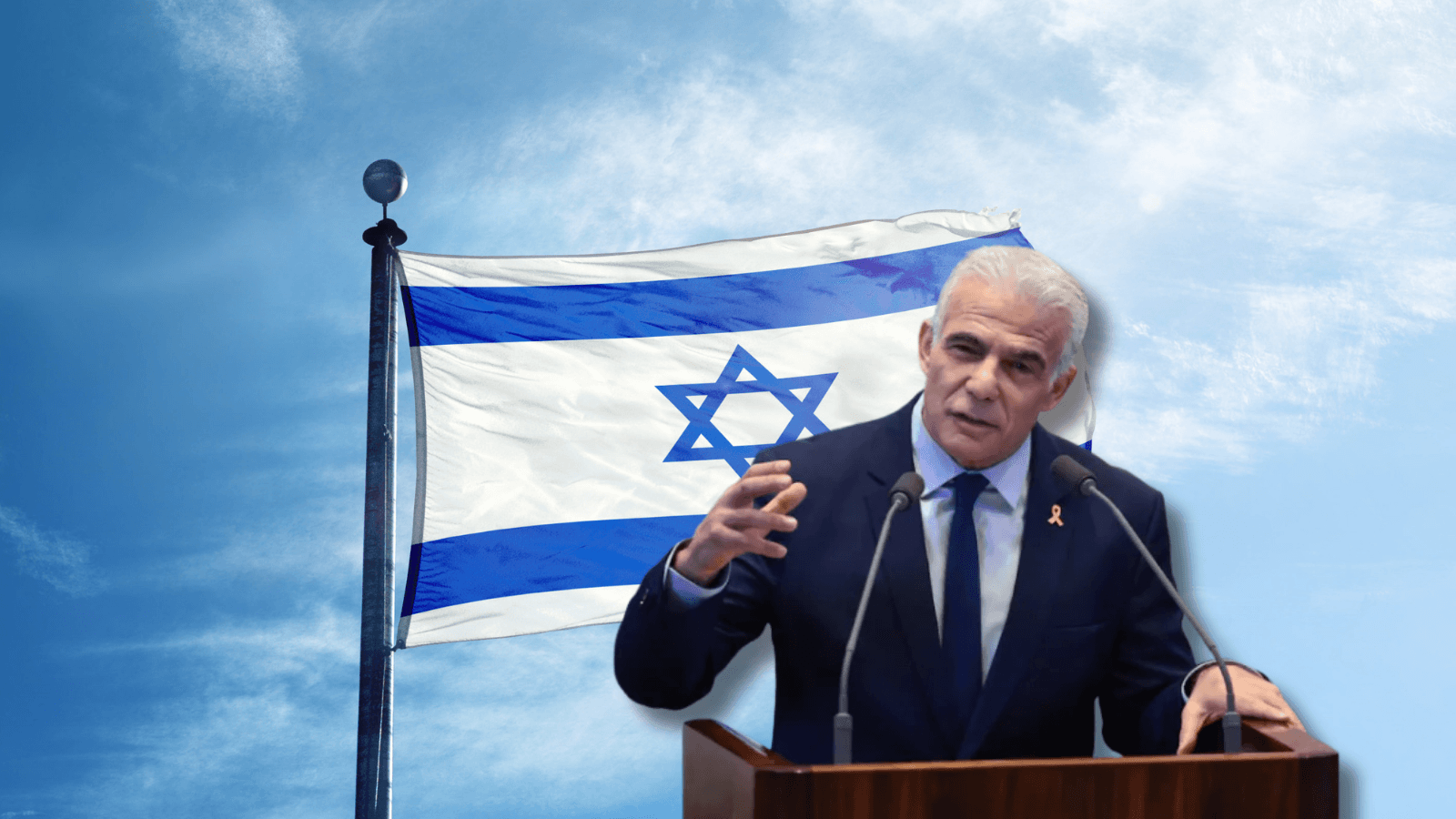


Israeli opposition leader Yair Lapid’s June 20, 2026, statement targeting Prime Minister Benjamin Netanyahu: “Netanyahu imposed the ‘Kurdish Plan’ without considering the predictable Turkish reaction and President Erdoğan’s influence in Washington.” He completely underestimated Ankara’s regional power and its influence over decision-makers in Washington. What was the result? Erdoğan practically gave him a lesson, disciplined him. His speech, which included the phrase “he gave him a lesson,” is not only significant in the context of Israeli domestic politics but also in the context of foreign policy, marking an important turning point that deserves a more in-depth analysis.
In this context, Lapid’s statement from the Knesset can primarily be regarded as a manifestation of the conflict within Israel, or even within the deep Zionist structure. For Lapid, with this move, he not only recorded the anti-Netanyahu discontent within the military and intelligence in the parliamentary minutes but also openly exposed the government’s regional shortsightedness and the structural errors in Israel’s regional security policies to the public.
Lapid, alongside the deep rift within the Zionist structure and Israeli domestic politics, clearly highlighted in this speech the Netanyahu government’s strategic shortsightedness, its inability to read regional balances, and its blindness to Türkiye’s weight/diplomatic power in regional and global diplomacy, as well as Ankara’s decision-making influence over Washington. He pointed out that, because of this, Israel has suffered a diplomatic and strategic defeat.
In his speech, Lapid also drew attention to Netanyahu’s plan (the “Kurdish Plan”), which was thwarted by Türkiye’s and, in this context, President Erdoğan’s resolute diplomacy, and admitted that Tel Aviv’s ability to change the regional status quo thru its proxies and undermine its rivals from within had suffered a severe blow.
Therefore, it is understood that the main objective of Lapid’s speech is to shake Netanyahu’s charisma and “security architect” image, thereby turning him into a “political corpse.” The phrase “Erdoğan practically gave him a lesson, disciplined him” appears at this point as carefully chosen words aimed at portraying Netanyahu as helpless and weak.
In this context, Lapid’s statements reveal how the arrogance and shortsightedness in Israel’s foreign policy collapsed upon hitting the wall of Türkiye’s regional realpolitik power and diplomatic weight in Washington. Moreover, it clearly demonstrates that the cost of completely severing relations with Ankara and disregarding Türkiye’s sensitivities is a strategic failure.
Two Birds with One Stone: Ending Netanyahu, Building a New Roadmap with Türkiye
Clearly, considering the recent polemics between Trump and Netanyahu, it can be said that the countdown has begun for Netanyahu and that Lapid has pressed the button here. Indeed, Lapid clarifies this picture by stating that Trump prefers Erdoğan’s realist power over Netanyahu’s adventures in the face of the risk of a regional war.
In his speech, Lapid also conveyed the message that the United States would increasingly highlight Türkiye as an indispensable “negotiation partner” and “central actor” in the new Middle East, with the capacity to ensure stability and balance Iran, rather than “costly proxies.” He also noted that it would not be appropriate for the U.S. to be forced to choose between Türkiye and Israel.
Therefore, Lapid, while emphasizing the need for a new “coordinator” in the normalization of U.S.-Israel relations to the Trump administration, which sees Netanyahu as a burden on American interests due to his radical and uncontrolled moves, is sending the message that a more harmonious cooperation with Türkiye is inevitable and is almost saying, “I am here.”
Lapid’s Confessions and the Binding Nature of the Podium in State Terrorism
On the other hand, while targeting Netanyahu, Lapid also seems to have exposed the Israeli state’s bad record. For these statements to be made from the parliamentary podium, alongside the fiasco of Israeli foreign policy, clearly reveals the role the Israeli state plays in regional instabilities. Lapid’s statements are an official admission of Israel’s strategy to use Kurdish groups and terrorist activities in the region as proxy forces against Türkiye, Syria, Iraq, and Iran. These words confirm that Israel directly participates in regional destabilization operations and adopts the terrorism card as a geopolitical tool. It is being demonstrated that Israel, which claims to be in search of security, is actually a security problem for the region.
Israel’s Proxy Actor Strategy Has Suffered a Major Blow!
Lapid’s words also indicate that Israel’s strategy based on “proxy forces/actors” has been significantly impacted. Indeed, Lapid points out that Netanyahu’s proxy power strategy, conducted thru regional terrorist organizations and Kurdish groups in the “Greater Israel Project,” has effectively hit a “wall of Türkiye.” Netanyahu and his team are criticized for not accounting for or underestimating the “predictable Turkish response.”
“The Kurdish Plan” and Strategic Collapse
Undoubtedly, the collapse of this plan has created deep disappointment and distrust among the proxy forces relying on Israel’s protective umbrella. The fact that the Kurds of Iran and the region did not fall into the trap of a civil war in Iran is the most concrete evidence of this. Tel Aviv’s retreat in the face of Ankara’s diplomatic pressure, the acknowledgment that regional proxies can be sacrificed at any moment on the bargaining table of great powers, and the recognition that Israel’s commitments fall short in the operational field make Lapid’s confessions highly noteworthy.
Israel’s “Proxy Actor” Pursuits
As Israel’s proxy power strategy collapses, it seems to be making some moves to renew its trust with old allies; on the other hand, it appears to be placing greater emphasis on its orientation toward new state and non-state actors in the region with whom it will share direct military/intelligence costs. In this context, while looking for ways to deepen its existing alliances in the Eastern Mediterranean (Greece-Greek Cypriot Administration of Southern Cyprus) to balance Türkiye’s influence, Israel will also accelerate strengthening security collaborations with some Gulf countries, particularly the United Arab Emirates, and countries in Northeast Africa (especially along the Red Sea line). As non-state actors, it is anticipated that they will attempt to revive ethnic and sectarian fault lines in the region, reintroducing the Kurdish card in this context, and more intensively bringing to the forefront the Alawite and Druze cards, which have been felt in the Syria-Lebanon context.
Lapid’s Speech Indicates Who Will Be Held Accountable!
Lapid’s heavy accusation is dragging the Netanyahu government, already overwhelmed by intelligence fiascoes, into a legitimacy crisis on the parliamentary floor. The revelation of the failure has the potential to trigger an institutional conflict by deepening the distrust and mutual accusations between the army (IDF), whose military planning on the ground has collapsed due to the politicians’ mistake, and the government. Therefore, the revelation of the fiasco in parliament could escalate the pressure for early elections on the Netanyahu government, triggering rifts within the coalition. In the security bureaucracy, it is highly likely that intelligence chiefs, whose military plans were sabotaged, will stage a collective resignation to shift the responsibility onto the political leadership and preserve institutional integrity.
Netanyahu Will Not Stay Idle!
After the “podium coup,” Netanyahu may resort to covert and asymmetric moves against Türkiye instead of direct field conflict. He may increase disinformation campaigns in the Western media to isolate President Erdoğan internationally. Especially in the Eastern Mediterranean and the Red Sea (and even in the Balkans), it may fund anti-Ankara alliances and attempt to sabotage Türkiye’s regional diplomatic networks thru cyber intelligence operations. At this point, it may attempt to mobilize regional and global media outlets, think tanks, and, of course, the Jewish lobby in the U.S. Congress, along with its influence, to sabotage Türkiye’s ties with the West and its rising position in the Arab world thru statements like “Neo-Ottomanism,” which has become a Netanyahu classic. By bringing Ankara to the forefront as an “unreliable partner” and especially as an “actor deviating from the NATO axis” due to its relations with Russia, it may try to sabotage Turkish-American defense industry projects, incite sanction pressures, and deepen Europe-centered financial constraints. However, whatever Netanyahu does, it seems that a verdict has been rendered against him from the podium.