

The international system is undergoing a painful “Interregnum”—a period in which the liberal, multilateral institutional model established after World War II is being dismantled on the basis of “ideology, values, and rules,” and replaced by a multipolar, asymmetric, fragmented distribution of power that undermines many human-centered values. International relations, defined as “relationships of power and interest,” are, to put it bluntly, taking on their true form as “shifty relationships on slippery ground.”
As the fault lines of global geopolitics are being reshaped, and international organizations—which are now seen as “relics of the Cold War”—are being dismantled one by one or systematically discredited, with their very existence seriously called into question, the North Atlantic Treaty Organization (NATO)—one of the influential organizations of that “cold era”—also appears to have been affected by this process and is facing the greatest existential and doctrinal transformation pressure in its history.
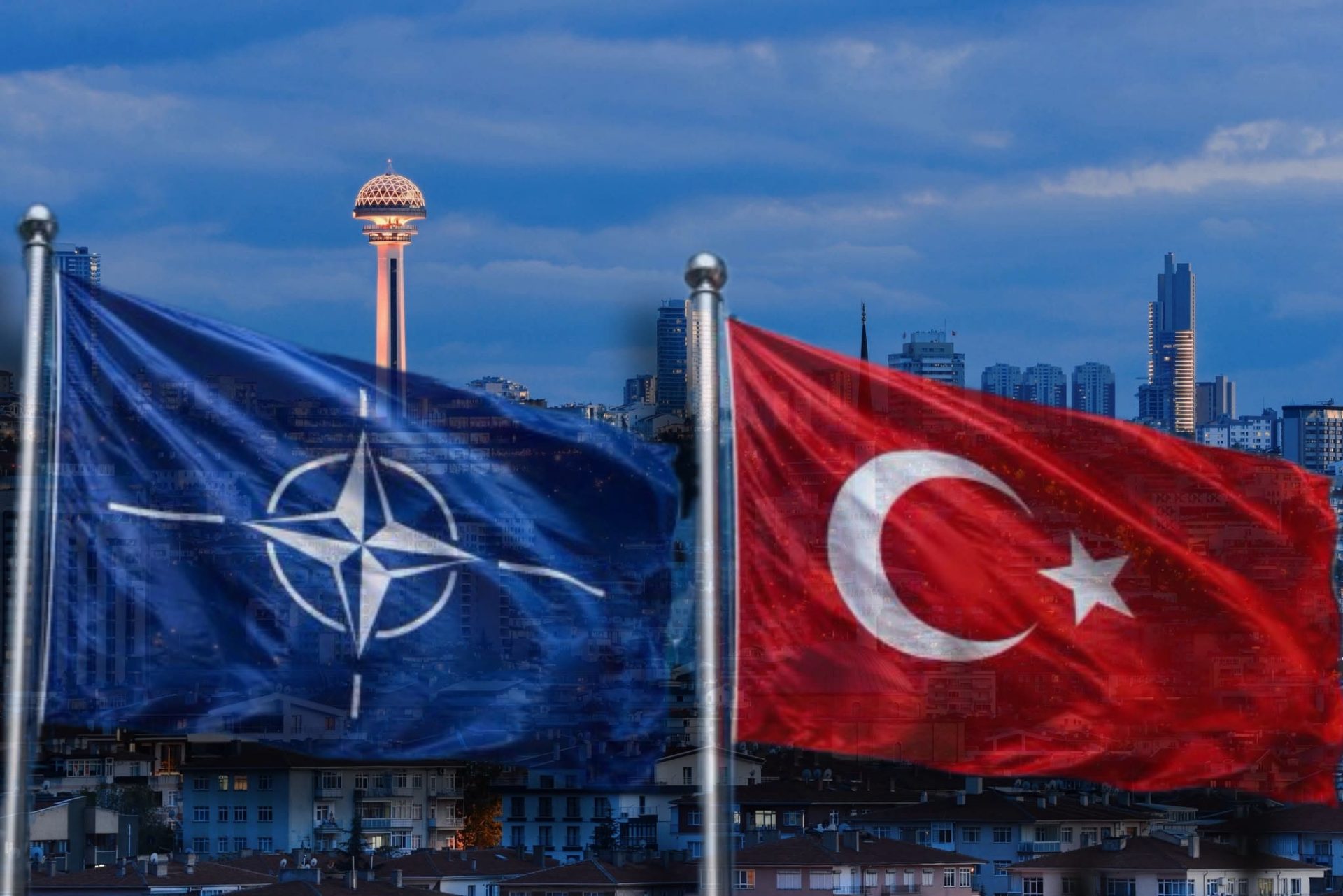
Undoubtedly, right in the midst of this “rapidly changing agenda” and “shifting dynamics”—which we can consider the backdrop to this spiral of uncertainty—the NATO Leaders’ Summit, to be held on July 7–8, 2026, in Ankara, at the Beştepe Presidential Complex in Ankara, represents more than just a host city or a geographical meeting point; it marks a historic turning point that will determine the alliance’s direction, boundaries, and military methodology within the new international system.
As the war in Ukraine enters its fifth year, amid escalating conflicts in the Middle East and the Eastern Mediterranean and, in this context, the uncertainty surrounding the ceasefire and peace process following the U.S.-Israel-Iran war, NATO member France—alongside fellow NATO member Greece—has taken a confrontational stance against the other two NATO members, Türkiye and the United Kingdom, over Cyprus, the United States’ (U.S.) periodic realignment of its transatlantic security commitments and the “shift in alignment” evident in this context, and, in response—and currently appearing as a desperate effort—Europe’s pursuit of “strategic autonomy,” all highlight the importance of the Ankara Summit and the challenging agenda it faces, along with the fundamental parameters that form its backdrop.
Is NATO in a “Period of Turmoil”?
In this context, the most fundamental issue within NATO is the “trust problem.” There has never been another crisis in NATO’s history where the trust problem has come to the fore to such an extent, involving multiple dimensions and actors. Yet, alliances are based on “trust,” and they are “security” structures built upon this “trust.” It is very clear that “where trust ends, the security problem begins,” and in this sense, NATO is turning into a security problem not only from the perspective of “others” but even among its own members; member states do not hesitate to engage in activities that could jeopardize or threaten another member’s security.
Consequently, at this stage, the tension between the two pillars that form the backbone of NATO has plunged the alliance into one of the most controversial and fragile periods in its history. NATO itself, like the international system, is experiencing a “period of transition.” If left unchecked, collapse is inevitable. This collapse will not take the form of a dissolution or disbandment like that of the “Warsaw Pact.”
In this context, the “Ankara NATO Summit”—taking place at a time when discussions on NATO’s mission and vision are being laid out and debated in the most radical terms; or, to put it more concretely, when internal cracks within the alliance have come to the surface—appears poised to serve as the venue for a long-overdue, multifaceted reckoning involving the United States and its European allies. Although the crisis reached its peak with Trump’s demands—first regarding financial burden-sharing in the context of the Russia-Ukraine War and subsequently regarding the Iran War—which were not met with full alliance solidarity on the ground (particularly regarding the use of military bases and logistics), it is in fact of a structural rather than a conjunctural nature.
To put it more concretely, at the root of all these debates and uncertainties lies a clash between two fundamental theses—one based in the U.S. and the other in Europe. In this NATO debate pitting Trump against “the others,” what immediately catches the eye is how the realities emerging within the “old” versus “new” framework are colliding with a wall of status-quo thinking. Therefore, it is very important to make a fundamental conceptual distinction here: the reality of a “New NATO” and “status quo” in the process of building the “New World Order.”
The “New NATO” Doctrine in a Multipolar World
As the first quarter of the 21st century draws to a close, the U.S.-centered unipolar world order is giving way to a multipolar “New World Order” architecture in which China, Russia, India, and regional middle powers are gaining prominence. In this radical process of transformation, the static defense organization of the Cold War is shedding its old skin to take on the conceptual framework of the “New NATO.” Here, the term “New NATO” refers not merely to a geographic defense pact, but to a hybrid global security umbrella that interconnects the military, technological, economic, and cyber domains—and embodies “a new mindset.”
Clearly, the old model’s cumbersome, costly, centralized, and ideologically imposed “bloc politics”—which was based on a specific geography or region—is incompatible with the pragmatic network of relationships in today’s multipolar world. In this context, “New NATO” emerges as a “hybrid structural model” to counter “hybrid threats”—including not only traditional threats but also new-generation threats (such as cyberattacks on critical infrastructure, AI-based disinformation campaigns, space-based threats, and the sabotage of global supply chains)—by expanding regional efforts to a global scale and incorporating the virtual realm.
The “New NATO” doctrine appears to aim to free the alliance from its bureaucratic inertia and reorganize it into what could be described as a “Networked Alliance.” This development makes a “transformation”—in a more radical sense—inevitable, rather than merely the “change” I have consistently emphasized in my previous analyses and assessments.
Structural Problem: Internal Alliance Conflicts During the Transformation Process
The transition from NATO’s cumbersome institutional structure to the “New NATO” doctrine is triggering deep ontological and philosophical conflicts due to the allies’ differing geopolitical priorities and threat perceptions. These growing pains of transformation manifest in three main areas:
- Asymmetric Geographical Divergence in Threat Perceptions: Despite the principle of “collective defense” (Article 5), while Russia is the sole absolute existential threat to the Baltic States, Poland, the United Kingdom, and even Germany; for Türkiye, the primary threats are terrorist organizations such as the PKK/YPG—which are growing along its southern borders with logistical support from allies—Israel’s expansionist policies in the region and related statements targeting Türkiye (including calls to expel Türkiye from NATO and a “U.S.-Türkiye War” scenario), as well as developments centered on the Eastern Mediterranean. Mediterranean allies such as France and Italy, however, view the main areas of vulnerability as the vacuum in state authority and waves of migration in the Eastern Mediterranean, the Middle East, North Africa, and the Sahel region.
- The “Strategic Autonomy” Divide in Relations with Global Powers: While Washington seeks to transform the alliance into a rigid global “anti-autocracy” bloc that also includes China, Russia, and North Korea; Europe’s leading nations (France and Germany) and Türkiye are adopting a stance in favor of pursuing a more rational, pragmatic, economically oriented, balance-based, multidimensional, and flexible foreign policy—a necessity in a multipolar world. (It should also be noted here that the approaches of these states—which hold a different stance from that of the U.S.—toward other countries, particularly China and Russia, are not uniform.)
- Defense Industry Restrictions and the Crisis of Trust: The military integration of an alliance depends on the interoperability of its defense industries. However, Türkiye’s exclusion from the F-35 program on the grounds of its S-400 systems, coupled with some allies’ continued imposition of covert or overt arms embargoes on Ankara (such as the U.S.’s CAATSA sanctions), undermines the Alliance’s principle of “indivisible security” and leads to a deep internal crisis of confidence.
Transatlantic Rift: U.S.-Europe Crises and Türkiye’s Balancing Role
The deepest fault line in intra-Alliance disputes lies in the deepening structural crises between the United States and Europe. The opposing positions and expectations of the parties involved in the “New NATO” process directly threaten the Alliance’s future:
- “The U.S./Trump Thesis”: Washington seeks to shift its resources to the Asia-Pacific region in order to contain China, which it views as its main rival. The U.S. expects Europe to unconditionally adhere to the principle of “fair burden-sharing,” allocate at least 2% of its gross domestic product (GDP) to defense, and shoulder the responsibility for conventional security in its own backyard on its own.
- “The European Thesis”: The “Strategic Autonomy” school, led by France, argues that Europe must not become a satellite of Washington’s global interests—and particularly of a potential military or trade war with China. While Europe expects the U.S. to maintain its nuclear deterrence umbrella, it wants defense spending to be channeled into its own domestic defense industry funds (EDF) rather than flowing to American arms giants.
How Should We Interpret Trump’s Participation in the Summit?
Frankly, the United States is seeking to transform NATO, and President Trump’s personal attendance at the summit reveals the U.S.’s intention to “fix,” “radically change,” and “restructure” this alliance on its own terms, as well as its aim to dictate the terms of the alliance. In this context, Trump’s radical stance—within the framework of his “America First” policy—regarding NATO’s functional limits and mission definition, which emphasizes the requirement for NATO partners to provide “unconditional bases and operational support”; the debate over “strategic autonomy”—a pursuit centered on European sovereignty, as embodied by Macron—appears poised to make its presence strongly felt at the negotiating table in Ankara.
In this context, while the U.S. puts a revision of NATO on the table, European members appear poised to act within an alliance framework aimed at preserving the status quo—and thus the scope of Article 5 and the organization’s traditional mission and vision in the context of collective defense. Furthermore, Trump appears set to try to turn the goal—raised at the Hague Summit—of allies allocating 5 percent of their GDP to defense into an official commitment in Ankara and to secure its acceptance.
The Importance and Impact of the Ankara Summit from the Perspective of the Alliance and Türkiye
It appears that we are facing a process in which, given the range of actors involved, nothing—especially “trust”—will ever be the same again. Under current conditions, Ankara emerges as a summit venue poised to mark the dawn of a new, multipolar global security architecture in which transatlantic ties have been completely severed. In other words, Ankara will serve as the capital for a challenging and critical agenda where NATO’s very survival is at the very center and its new narrative is being written.
The outcome of the summit will either transform NATO—under U.S. leadership and in the form desired by Trump—into a “new-generation alliance” with significantly greater global operational power and a more aggressive stance, or it will open the door to a multipolar world where transatlantic ties have permanently weakened and Europe seeks to play a strong role. This multipolar environment—which implies that Europe and the U.S. will chart their own courses—is tantamount to the dissolution of NATO and represents a “Western Problem” that could potentially lead to a new world war.
Consequently, the “Ankara NATO Summit” emerges as an existential crossroads where a choice must be made between radical reform and a historic rupture—not only for the NATO alliance but also for the future of the Western world—and where the parties will lay their cards on the table. If the parties at the table cannot reach a compromise, European allies’ efforts to establish independent defense alternatives outside NATO and to build their own armies will gain even more momentum.
For this reason, Türkiye’s task is by no means easy. Indeed, rather than merely hosting guests, Ankara appears poised to host a significant process aimed at saving the organization’s future and, in this context, imparting a new mission and vision to NATO.
In this context, it seems Ankara will face “three types of burdens and the steps it must take,” along with “an opportunity.” These are:
- To protect NATO’s fundamental backbone by limiting the destructive effects of the transatlantic crisis;
- To prevent the institutional fragmentation of the alliance by devising solutions that will reconcile the parties in the context of NATO’s shared future, and to play an active “balancing/reassuring” mediating role by bringing to the table operational proposals—such as “Regional NATOs/Mini-NATOs”—that both sides can agree on (for example, complementary defense strategies that would fundamentally transform the security architecture);
- Within this framework, to largely put an end to the debates regarding “mission and vision” by proposing a NATO structure suited to the “New Normal/Conjuncture” (for example, by proposing a more decentralized and dual-centered model for NATO’s new command structure).
- Consequently, regardless of the outcome of this Summit, Türkiye’s geopolitical center of gravity will once again be affirmed. This is the greatest opportunity the NATO crisis has presented to Türkiye.